


Generator Keeps Shutting Off? Low Oil May Be Why
* This site contains affiliate links for which we may be compensated.
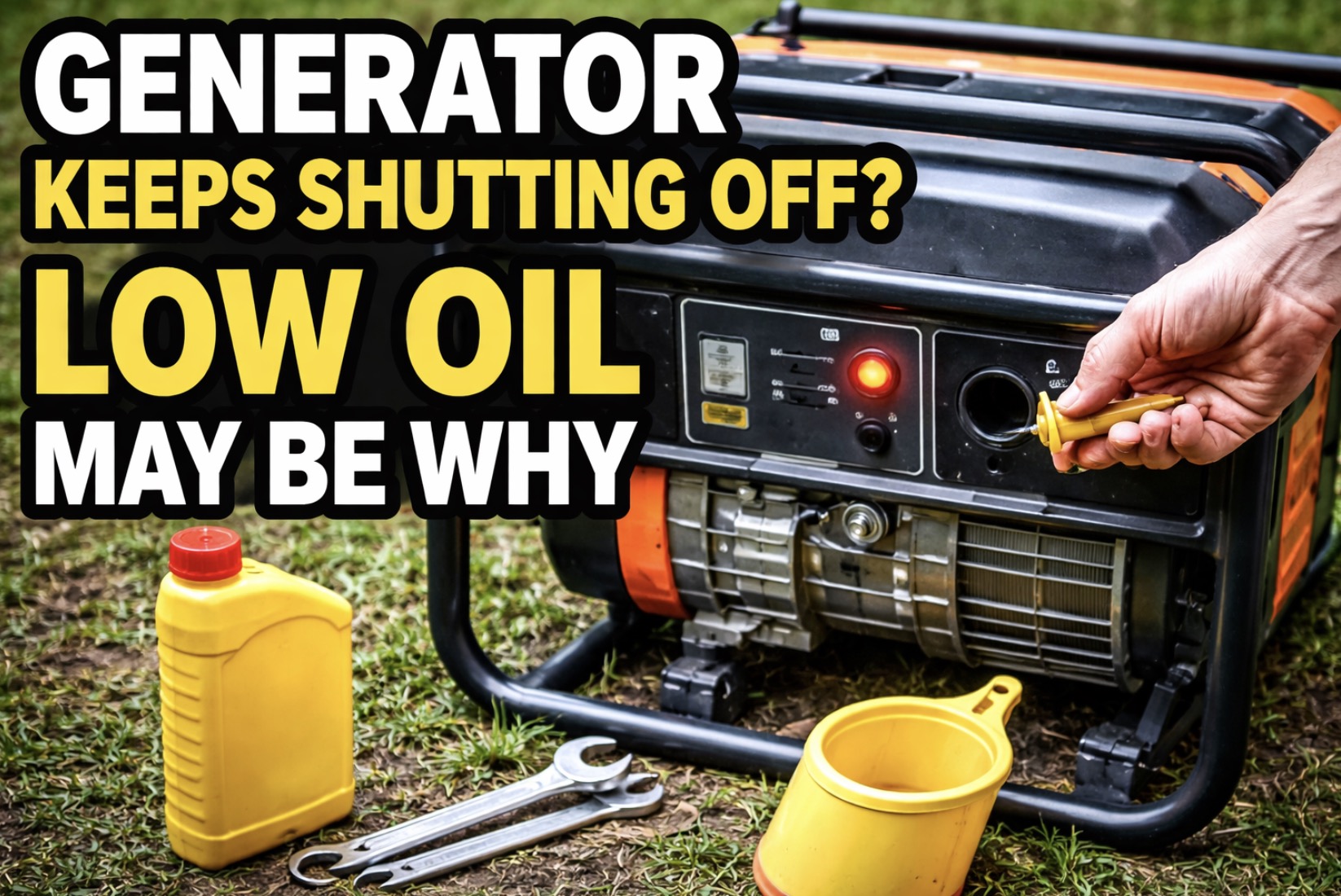
If your generator starts, runs for a short time, and then suddenly shuts off, low oil is one of the first things to check. Many portable generators are designed with a low-oil shutdown system that protects the engine from damage by stopping it before oil starvation turns into a seized engine. That safety feature is helpful, but it can also make a simple maintenance issue feel like a major breakdown.
For a wider look at the engine and electrical components involved in generator troubleshooting, see Generator Parts and Repairs.
Why Low Oil Causes a Generator to Shut Down
Most modern portable generators have a low-oil sensor inside the crankcase. When the oil level drops below a safe point, the sensor tells the ignition system to shut the engine down. This is done to prevent internal engine damage, especially to the crankshaft, rod bearings, and cylinder walls.
That means a generator may still have some oil in it and yet keep shutting off because it does not have enough oil for safe operation. This is especially common when the generator is sitting on uneven ground, because the oil can shift away from the sensor and trigger shutdown even if the crankcase looks partially full.
Common Signs That Low Oil Is the Real Problem
Before assuming you have a carburetor or ignition issue, look for a few clues that point toward the low-oil system:
- The generator starts normally but shuts off within seconds or a few minutes.
- It restarts again after sitting briefly, then shuts down the same way.
- There is no obvious sputtering like you would expect from stale fuel.
- The shutdown happens more often when the generator is on a slope.
- The oil level is near the bottom mark or not visible where it should be on the dipstick.
If your generator has been stored for a while, the issue may simply be that the engine oil has fallen below the safe threshold. Keeping a bottle of generator 10W-30 oil or the correct viscosity for your climate on hand makes this an easy first fix.

STP Premium Synthetic Blend 4 Cycle Small Engine Oil, SAE 10w30 Motor Oil for Lawnmowers, Generators, Tractors, Snow Blowers, and More, 32 fl oz

TRIAX Power 4-Stroke 10W-30 Full Synthetic 4-Cycle Small Engine Motor Oil | For Lawnmower, Generator, Tractor, Log Splitter, Snow Blower, Pressure Washer, Cement Mixer, and More (1 Quart)

STP Premium Small Engine 4 Cycle Oil Formula, SAE10W-30 Small Engine Oil & Care Formula Reduces Wear for Lawnmower, Push Mower, Tractor, 32 Oz, STP (Pack of 2)
Step 1: Check the Oil the Right Way
A lot of owners get a false reading because they check oil on a tilted surface or use the dipstick incorrectly. Always check oil with the generator on level ground and follow the manual’s dipstick instructions, since some models require you to rest the dipstick on the threads while others require it to be screwed in fully.
- Shut the generator off and let it sit for a minute.
- Place it on flat, level ground.
- Remove the oil fill cap or dipstick and wipe it clean.
- Reinsert it according to the manual and check the level carefully.
- Top off the oil if it is low or borderline.
Even being slightly low can trigger shutdown on some models, especially during startup or when the generator is moved around.
Step 2: Use the Correct Oil Viscosity
Using the wrong oil can also contribute to shutdown complaints, especially in cold weather where thick oil makes starting harder and can affect lubrication during the first moments of operation.
If you are unsure whether your unit should be using 5W-30, 10W-30, or another viscosity, read 5W20 vs 5W30 vs 10W30 Oil – Which One to Use for Generators?. That can help you match the oil type to your generator and climate instead of guessing.
If you need supplies, a simple generator oil funnel kit makes topping off cleaner, and a small oil drain pan helps when you decide to change the oil completely.
Step 3: Watch for Low-Oil Shutdown Symptoms vs Fuel Problems
Low oil and fuel problems can look similar at first, but there are a few differences.
- Low-oil shutdown: the engine often stops cleanly and abruptly, almost like someone flipped a switch.
- Fuel starvation or dirty carburetor: the engine usually sputters, surges, or fades out before stopping.
- Choke-related fuel issues: the engine may restart only with choke applied.
- Low-oil problems: the engine may restart once the oil settles, then shut down again a minute later.
That distinction matters because many people start cleaning the carburetor when the real issue is just an oil level that is barely under the sensor threshold.
Step 4: Check for Oil Leaks or Oil Consumption
If the oil is low, the next question is why. Some generators are simply overdue for a top-off, while others may be leaking or slowly burning oil.
- Inspect around the drain plug, fill cap, and crankcase gasket for wet spots.
- Look underneath the generator for fresh oil drips.
- Check for blue smoke from the exhaust, which can suggest oil burning.
- Think back to when the oil was last changed or topped off.
A generator that has been run for long periods under heavy load can consume some oil naturally, so checking it before each use is a smart habit rather than an optional one.
Step 5: Consider the Low-Oil Sensor Itself
If the oil level is correct and the generator is on level ground, the shutdown system itself may be acting up. Low-oil sensors can fail, wiring can loosen, and sludge inside the crankcase can sometimes interfere with proper sensing.
Possible warning signs of a sensor issue include:
- The oil level is clearly full, but the generator still shuts off immediately.
- The problem appears only intermittently.
- The generator ran fine after an oil change, then the problem returned without the oil level dropping much.
At that point, you are moving beyond a simple top-off and into model-specific diagnosis. The good news is that many generators still make low-oil system access manageable, especially if you are already familiar with your machine’s layout.
Step 6: Do Not Ignore Overfilling Either
People focus on low oil, but too much oil can also cause trouble. Overfilling may create foaming, smoking, messy blow-by, and erratic running. If someone recently added oil without checking capacity carefully, the crankcase may now be above the safe range.
The goal is not “as much oil as possible.” The goal is the correct level shown by the dipstick or fill point in the manual.
STP Premium Synthetic Blend 4 Cycle Small Engine Oil, SAE 10w30 Motor Oil for Lawnmowers, Generators, Tractors, Snow Blowers, and More, 32 fl oz

TRIAX Power 4-Stroke 10W-30 Full Synthetic 4-Cycle Small Engine Motor Oil | For Lawnmower, Generator, Tractor, Log Splitter, Snow Blower, Pressure Washer, Cement Mixer, and More (1 Gallon)
TRIAX Power 4-Stroke 10W-30 Full Synthetic 4-Cycle Small Engine Motor Oil | For Lawnmower, Generator, Tractor, Log Splitter, Snow Blower, Pressure Washer, Cement Mixer, and More (1 Quart)
Simple Habits That Prevent Low-Oil Shutdowns
A few routine checks can prevent a lot of unnecessary frustration:
- Check oil before every extended run.
- Keep the generator level during operation.
- Change oil on schedule, especially after break-in and heavy use.
- Carry spare oil and a funnel with the generator.
- Inspect for small leaks before they become bigger problems.
If you are comparing generators and want a model with solid support and easy maintenance access, browsing a guide like Westinghouse Generator Reviews (Dual Fuel, Inverter, Standby) can help you evaluate serviceability along with power output.
When to Look Beyond the Oil System
If topping off the oil does not solve the issue, and the level remains correct, you may need to investigate fuel contamination, carburetor blockage, overheating, or ignition problems instead. But because checking the oil is quick, cheap, and often overlooked, it should be one of the very first steps any time a generator keeps shutting off unexpectedly.
Summary
A generator that keeps shutting off is not always dealing with a serious mechanical failure. Very often, the low-oil shutdown system is doing exactly what it was designed to do: protect the engine from damage. Check the oil on level ground, confirm the viscosity is correct, watch for leaks or consumption, and keep the oil level within the proper range. In many cases, that simple check is all it takes to stop the shutdown cycle and get the generator running normally again.
Savior Generator Petcock Gas Fuel Tank Shut Off Valve for Champion Generac | 0j0974,Switch,Predator Etq Homelite Husky Powermax,(16mm x 1.5mm)

GX160 Pull Start Assembly with Start Cup Compatible with Honda GX120 GX200 | Recoil Starter Compatible with 28400-ZE1-003ZF 28400-ZH8-013YA Pull Starter Engine 4/5.5/6.5hp Motor (2 PACK)

Generac 5W-20 Maintenance Kit for 20Kw-26Kw 999cc Generators (Replaces A0002074712)

YGQ Generator Fuel Petcock Shut Off Valve for Champion 122.070400.05 | for Generac 310574GS Firman Gas Tank Switch M10X1.25mm
Supermotorparts 192980GS Fuel Shut Off Valve Service Kit w/Grommet Bushing Plastic Gas Tank

GNA410 Generator Wheel and Handle Kit for W-EN 4500 and 4750-Watt Generators, Compatible with W-EN DF475T, DF475, GN4500, DF472, DF475X, DF472X
About GeneratorStop.com
We are your #1 power generator guide and resource online. We are dedicated on providing you the best and most useful generator related articles, reviews and tools. learn more...