


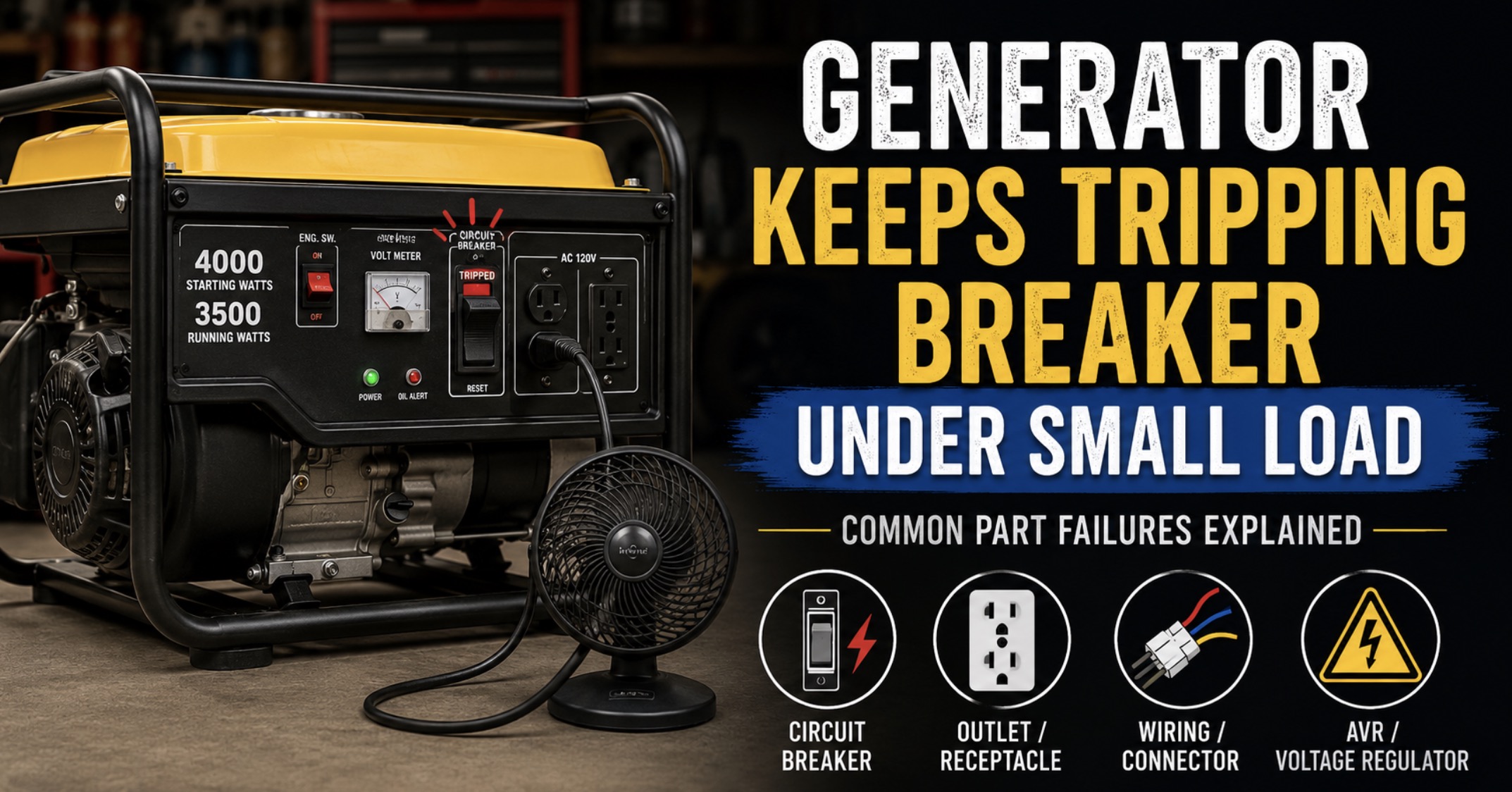
Generator Keeps Tripping Breaker under Small Load – Common Part Failures Explained
* This site contains affiliate links for which we may be compensated.
A generator that keeps tripping its breaker under a small load is more concerning than a generator that trips only when overloaded. If you plug in a refrigerator, fan, work light, charger, or small tool and the breaker trips almost immediately, the problem may not be the appliance’s normal wattage. It could be a weak breaker, damaged outlet, shorted cord, failing AVR, bad inverter module, winding fault, loose wiring, moisture intrusion, or a connected device with an internal electrical problem.
The key is to troubleshoot carefully instead of repeatedly resetting the breaker and trying again. A breaker is a safety device. If it trips, it is usually reacting to overcurrent, a short, heat, ground fault, or a fault inside the generator or connected load. Resetting it over and over without finding the cause can make the problem worse and may damage the generator, wiring, or appliances.
For a broader overview of generator parts, wiring, and repair topics, see Generator Parts and Repairs.
First: What Breaker Is Actually Tripping?
Before diagnosing the generator, identify which protection device is opening. Different breakers point to different problems.
Common possibilities include:
- Generator main breaker: protects the generator output from overload or short circuits.
- Individual outlet breaker: protects a specific receptacle, such as a 120V or 240V outlet.
- GFCI outlet or GFCI breaker: trips when it detects current leakage to ground.
- House panel breaker: trips when the generator is connected through a transfer switch or inlet system.
- Inverter overload protection: may shut off power output without a traditional breaker handle moving.
This matters because a GFCI trip is not the same as a normal overload trip. A generator may trip a GFCI with a tiny load if there is moisture, insulation leakage, neutral-ground bonding conflict, or a faulty appliance. A standard breaker, on the other hand, usually trips from overcurrent, heat, or a direct short.
Small Load vs Hidden Surge Load
Sometimes a “small load” is not as small as it seems. A phone charger or LED lamp is truly small. A refrigerator, freezer, sump pump, shop vac, microwave, circular saw, or compressor may have a modest running wattage but a much larger startup surge.
Examples of loads that can surprise people include:
- Refrigerators and freezers
- Window air conditioners
- Sump pumps
- Well pumps
- Microwaves
- Air compressors
- Power tools
- Shop vacs
If the breaker trips only when a motor starts, the generator may be reacting to startup surge. If it trips with a basic lamp, fan, or charger, the problem is more likely a fault, weak breaker, wiring issue, or electrical component failure.
If you are unsure whether the appliance is really a small load, use Generator Load Calculation Sheet and Formula before assuming the generator is defective.
Step 1: Unplug Everything and Reset the Generator
Start with the cleanest possible test. Remove every load from the generator.
- Turn the generator off.
- Unplug all cords and appliances.
- Reset the breaker or outlet protection.
- Restart the generator with nothing connected.
- Let it warm up for a few minutes.
- Watch whether the breaker trips with no load.
If the breaker trips with absolutely nothing plugged in, stop using the generator. That usually points to an internal generator problem such as a bad breaker, shorted wiring, damaged receptacle, alternator issue, inverter fault, or moisture inside the control panel.
If the breaker stays on with no load, the problem may be related to the cord, appliance, load size, GFCI behavior, or a weakness that appears only under demand.
Step 2: Test With a Known-Good Small Load
Next, test with a simple known-good load. A basic incandescent work light, small fan, or low-wattage device is often better than a refrigerator or power tool for diagnosis.
- Plug the small load directly into the generator outlet.
- Avoid extension cords for the first test.
- Let it run for several minutes.
- Watch for breaker trips, flickering, buzzing, or outlet heat.
If the generator trips with a known-good small load plugged directly into the outlet, the generator side becomes more suspicious. If it works fine directly but trips with an extension cord or certain appliance, the cord or appliance may be the culprit.
A simple plug-in watt meter or generator voltage meter can help you see whether voltage and load are behaving normally.

Fluke BK120 SmartTrace Breaker Finder and Socket Tester

Klein Tools NCVT1P Voltage Tester, NCVT Pen, 50 to 1000V AC

Ideal Electrical SureTrace Plus Circuit Tracer, Circuit Breaker Finder Tool
Common Part Failure 1: Weak or Failing Generator Breaker
Breakers can wear out. A breaker that has tripped many times, overheated, vibrated loose, or been exposed to moisture may trip at lower-than-normal current. This is especially likely if the generator is older or has spent time outdoors, in a shed, or in a damp garage.
Signs of a weak breaker include:
- It trips under a load that used to work fine.
- It feels loose, mushy, or does not reset cleanly.
- It gets warm quickly under a small load.
- It trips randomly after vibration.
- The breaker body looks discolored, cracked, or heat-damaged.
A weak breaker should be replaced with the correct rating and type, not bypassed. Never install a larger breaker just to stop nuisance trips. That can allow wiring or generator components to overheat before protection activates.
If you need replacement parts, search by your exact model number for a generator circuit breaker replacement rather than guessing based only on amperage.
Common Part Failure 2: Damaged Outlet or Receptacle
Generator outlets take abuse. Plugs get yanked, cords vibrate, moisture gets in, and heavy loads can heat the contacts. A damaged receptacle can trip a breaker even under light load because the connection is loose, arcing, shorting, or overheating.
Inspect the outlet for:
- Burn marks
- Melted plastic
- Loose plug fit
- Cracked housing
- Corrosion inside the slots
- Buzzing, sparking, or heat under load
If one outlet trips the breaker but another outlet works normally with the same load, that receptacle or its wiring may be the problem. Replace damaged outlets with the correct generator-rated part. Do not keep using a receptacle that smells burned or feels hot.
A generator receptacle replacement may be inexpensive, but the wiring behind it should also be inspected for heat damage.
Common Part Failure 3: Bad Extension Cord
A bad extension cord can make it look like the generator is tripping under a small load. Long cords, thin cords, damaged insulation, loose plug ends, and overheated connectors all create resistance and potential faults.
Check the cord for:
- Cut, cracked, or crushed insulation
- Loose plug ends
- Burn marks on blades
- Warm plugs after only a short run
- Exposed wire
- Moisture inside connectors
Test the generator with the load plugged directly into the outlet. If it works directly but trips through the cord, replace the cord. For generator use, especially with appliances or tools, a heavy-duty generator extension cord is usually safer than a light indoor cord.
Common Part Failure 4: Faulty Appliance or Tool
Sometimes the generator is not the problem. A connected device can have a short, failing motor, bad capacitor, damaged cord, or ground fault that trips protection instantly.
Appliance-related clues include:
- The same appliance trips the generator every time.
- Other loads work fine.
- The appliance hums, buzzes, or struggles to start.
- The appliance plug or cord gets warm.
- The appliance trips a household GFCI or breaker too.
Do not assume a refrigerator, freezer, pump, or power tool is healthy just because it used to work. Motors and compressors can fail in ways that cause high current draw, especially at startup.
Common Part Failure 5: GFCI Trip from Moisture or Leakage
If the generator has GFCI outlets, a trip under a small load may indicate leakage current rather than overload. This can happen when moisture gets into cords, outlets, appliances, or the generator panel.
Common GFCI trip causes include:
- Wet extension cord ends
- Moisture inside a tool or appliance
- Damaged insulation
- Neutral-ground bonding conflict
- Using certain transfer setups incorrectly
- Generator outlets exposed to rain or washing
Do not defeat or bypass GFCI protection. Instead, dry the equipment, inspect cords, test one item at a time, and confirm your transfer setup is compatible with your generator’s neutral configuration.
Common Part Failure 6: Loose or Burned Wiring Behind the Panel
Portable generators vibrate constantly. Over time, that vibration can loosen spade connectors, screws, terminals, and wire nuts inside the control panel. A loose connection can heat up, arc, trip the breaker, or cause intermittent power loss.
Possible wiring symptoms include:
- Breaker trips randomly under light load.
- Outlet power cuts in and out.
- Panel smells hot or burned.
- Voltage flickers.
- One outlet works while another does not.
- Generator trips when the frame vibrates.
With the generator off, cooled, and spark plug wire disconnected, you can remove the control panel cover and inspect for obvious loose or burned connectors if you are comfortable doing so. Do not touch or modify wiring unless you understand what you are working on.
Common Part Failure 7: Failing AVR on Conventional Generators
On many non-inverter generators, the automatic voltage regulator, or AVR, helps control output voltage. If the AVR fails or becomes unstable, the generator may produce poor voltage, trip protection, or behave badly under load.
AVR-related symptoms may include:
- Voltage too high or too low
- Voltage dropping sharply under small load
- Lights flickering
- Breaker tripping when a load is added
- Generator runs but power output is unstable
Before blaming the AVR, rule out overload, bad cords, damaged outlets, and fuel/engine problems. If the generator engine runs smoothly but electrical output is unstable, an AVR or alternator-side issue becomes more likely.
For a related electrical-output troubleshooting path, see Generator Runs but No Power to the House? 7 Things to Check Before Calling a Technician.
Common Part Failure 8: Inverter Module Problems
Inverter generators use electronics to convert and regulate power. If the inverter module is failing, the generator may run fine mechanically but trip overload protection or cut output with a very small load.
Possible inverter-module clues include:
- Engine runs normally but outlets shut off.
- Overload light comes on with a small load.
- Resetting works briefly, then the same problem returns.
- Power output disappears while the engine continues running.
- The generator works only with extremely tiny loads.
Inverter modules can be expensive, so do not replace one until you have ruled out cords, appliances, breakers, outlets, and obvious wiring issues. If the overload light is involved, see Generator Overload Light On? Here’s What It Means for more detail.
Common Part Failure 9: Stator or Rotor Winding Faults
A winding fault can cause electrical problems even when the engine runs normally. If stator windings, rotor windings, brushes, or slip rings are damaged, the generator may produce unstable voltage, weak output, or trips under load.
Possible winding-related symptoms include:
- Burning electrical smell
- Visible discoloration on windings
- Output voltage unstable or missing
- Breaker trips with small loads
- Generator previously overloaded heavily
- Smoke or heat from the alternator end
This is a deeper diagnosis area. A basic multimeter can help check continuity and obvious shorts, but model-specific specs are needed for confidence. If you see burned windings or melted insulation, do not keep running the generator.
Common Part Failure 10: Carbon Brush or Slip Ring Problems
Some conventional generators use brushes and slip rings to feed the rotor field. Worn brushes or dirty slip rings can cause weak or unstable output. While this does not always trip a breaker directly, unstable output under load can create symptoms that look like breaker trouble.
Look for:
- Worn brushes
- Brushes stuck in their holders
- Dirty or corroded slip rings
- Intermittent power output
- Voltage changing when the generator vibrates
If your generator has brushes, inspect them only with the generator off and safe. Replace brushes with the correct parts for your model.
Common Part Failure 11: Shorted Wiring or Pinched Harness
A pinched wire inside the panel or alternator area can trip a breaker immediately. This may happen after transport, previous repairs, rodent damage, vibration, or a cover being reinstalled incorrectly.
Check for:
- Wires rubbed bare against the frame
- Rodent-chewed insulation
- Wires pinched under covers
- Burned connectors
- Loose terminals touching metal
If you find bare copper, melted insulation, or arcing marks, stop and repair the wiring properly before using the generator again.
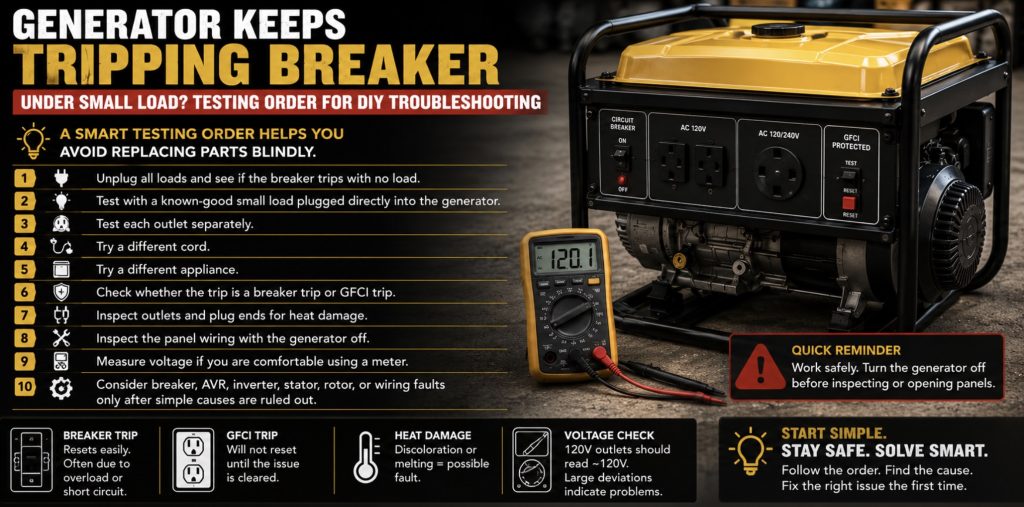
Testing Order for DIY Troubleshooting
A smart testing order helps you avoid replacing parts blindly.
Use this sequence:
- Unplug all loads and see if the breaker trips with no load.
- Test with a known-good small load plugged directly into the generator.
- Test each outlet separately.
- Try a different cord.
- Try a different appliance.
- Check whether the trip is a breaker trip or GFCI trip.
- Inspect outlets and plug ends for heat damage.
- Inspect the panel wiring with the generator off.
- Measure voltage if you are comfortable using a meter.
- Consider breaker, AVR, inverter, stator, rotor, or wiring faults only after simple causes are ruled out.
A digital multimeter, outlet tester, and properly rated test load can make troubleshooting much easier.

Circuit Breaker Finder Kit, Electrical Circuit Tracer with Digital Multimeter, GFCI Outlet Tester, 3-Piece Electrical Diagnostic Tool Set with LCD Display, NCV Test – 2027 Upgraded Version

Klein Tools 80101 Circuit Breaker Finder Kit, 4-Piece

Klein Tools ET310KIT AC Circuit Breaker Finder Kit
When a Breaker Trip Is Actually Normal
Not every trip means a broken part. A breaker may be doing exactly what it should if:
- You connected too many loads.
- A motor load had a big startup surge.
- A cord or appliance is damaged.
- Water entered a cord or GFCI outlet.
- The generator is being asked to run beyond its rating.
The difference is pattern. If it trips only when overloaded, reduce load. If it trips under a genuinely small, known-good load, investigate parts and wiring.
When to Stop and Call a Technician
DIY troubleshooting is fine for simple load testing, cord checks, visual inspections, outlet replacement on familiar equipment, and basic meter checks if you know how to work safely. But some symptoms call for professional help.
Stop and get help if:
- The breaker trips with no load connected.
- You see melted wiring or burned outlets.
- The generator has unstable or dangerously high voltage.
- There is smoke or burning smell from the alternator end.
- The inverter module or AVR is suspected but expensive to replace.
- You are not comfortable working around electrical panels.
- The generator is under warranty and disassembly could void coverage.
A generator with electrical faults can damage appliances or create shock and fire hazards. Do not guess with wiring if you are unsure.
How to Prevent Breaker Trips in the Future
Once the issue is fixed, good habits can reduce the chance of repeat trips.
- Calculate loads before connecting appliances.
- Start motor-driven loads one at a time.
- Use properly rated generator cords.
- Keep outlets and plugs dry.
- Store the generator away from moisture.
- Inspect the control panel for loose connections during seasonal maintenance.
- Do not repeatedly reset breakers without finding the cause.
- Replace weak or heat-damaged breakers and receptacles with correct parts.
Breakers usually trip for a reason. Treat every trip as information, not just an inconvenience.
Summary
A generator that keeps tripping its breaker under a small load may have more than a simple overload problem. Start by unplugging everything, testing with a known-good small load, checking cords, and identifying whether the trip is from a standard breaker or GFCI protection. Common part failures include weak breakers, damaged receptacles, bad cords, faulty appliances, loose wiring, failing AVR, inverter module issues, winding faults, worn brushes, and pinched wiring. If the breaker trips with no load, outlets are burned, voltage is unstable, or wiring looks damaged, stop using the generator and get proper repair help before the problem becomes dangerous.
Savior Generator Petcock Gas Fuel Tank Shut Off Valve for Champion Generac
BlueStars 212CC Pull Start Recoil Starter - for Harbor Freight Predator

WOTIAN Pull Start Assembly Compatible with Champion 389cc 420cc 439cc 459cc 5500w 7500w 9000w Generator Parts Engine Recoil Starter Part#46.061000.00
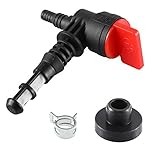
Supermotorparts 192980GS Fuel Shut Off Valve Service Kit w/Grommet Bushing Plastic Gas Tank

YAMAKATO Predator 9000 8750 4000 4375 Generator Fuel Tank Shut Off Valve
About GeneratorStop.com
We are your #1 power generator guide and resource online. We are dedicated on providing you the best and most useful generator related articles, reviews and tools. learn more...