


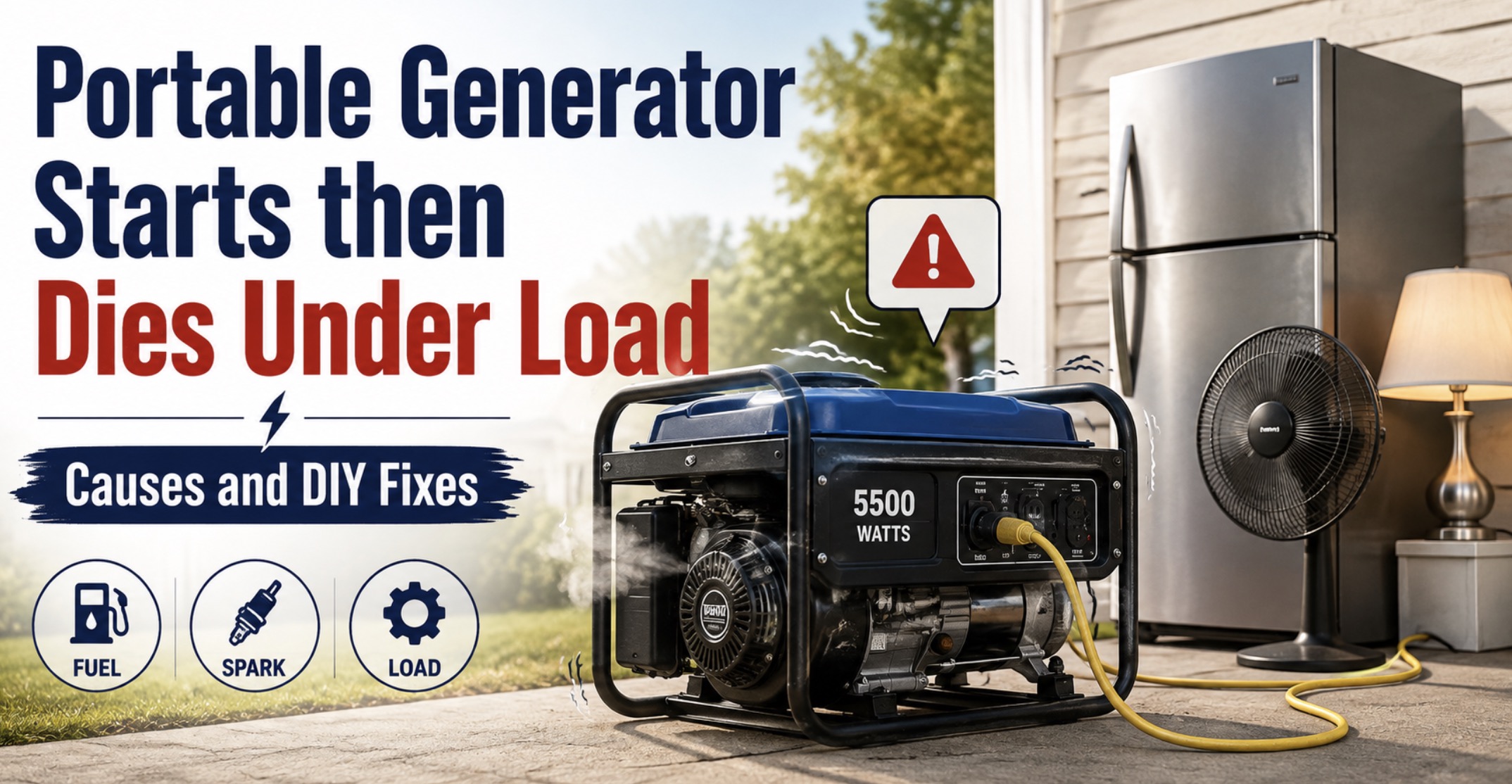
Portable Generator Starts then Dies Under Load – Causes and DIY Fixes
* This site contains affiliate links for which we may be compensated.
A portable generator that starts fine but dies as soon as you plug something in is usually telling you that the engine can run, but it cannot handle demand. The cause may be as simple as too much load, a dirty air filter, stale fuel, a clogged carburetor, low oil, or a weak spark plug. In other cases, the issue may be electrical, such as a bad breaker, damaged outlet, weak AVR, inverter fault, or a connected appliance with a large startup surge.
The important thing is to separate “starts but dies under load” from “will not start at all.” If the engine starts and idles with no load, you already know it has at least some fuel, spark, compression, and basic ignition. The failure happens when the generator is asked to work. That means the first checks should focus on load size, fuel delivery under demand, airflow, oil level, and electrical output.
For a broader overview of generator troubleshooting and parts, see Generator Parts and Repairs.
What “Dies Under Load” Actually Means
When a generator dies under load, it usually means the engine cannot maintain proper speed once electrical demand increases. Portable generators need to keep engine RPM steady so the alternator or inverter system can produce usable power. When you plug in a refrigerator, air conditioner, pump, power tool, or heater, the generator suddenly needs more engine power.
If something is wrong, the generator may:
- Run normally with nothing plugged in, then shut off when a load is connected.
- Start and idle, but bog down when a refrigerator or pump kicks on.
- Surge, sputter, and die after a few seconds under load.
- Trip the breaker or show the overload light.
- Restart after cooling or after loads are unplugged.
- Run small devices but die with larger appliances.
That pattern is different from a dead battery, broken pull cord, or no-spark condition. The engine can run, but it cannot keep running once work is added.
Start With the Simple Question: Are You Overloading It?
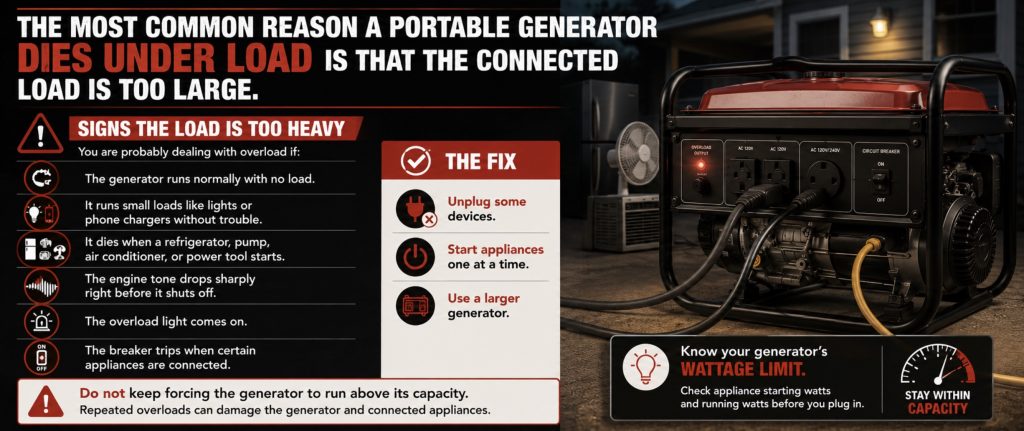
The most common reason a portable generator dies under load is that the connected load is too large. Many people look only at the generator’s advertised starting watts and forget that running watts are lower. They also forget that motor-driven appliances can demand a big startup surge.
Common surge-heavy loads include:
- Refrigerators
- Freezers
- Sump pumps
- Well pumps
- Window air conditioners
- Air compressors
- Circular saws
- Shop vacs
- Microwaves
A generator may handle a refrigerator once it is running, but still struggle when the compressor starts. It may also handle one large appliance alone, but not when lights, chargers, fans, and another motor load are already connected.
If you are not sure how much wattage you are asking from the unit, use Generator Load Calculation Sheet and Formula to estimate running watts and startup watts before assuming the generator is broken.
Signs the Load Is Too Heavy
You are probably dealing with overload if:
- The generator runs normally with no load.
- It runs small loads like lights or phone chargers without trouble.
- It dies when a refrigerator, pump, air conditioner, or power tool starts.
- The engine tone drops sharply right before it shuts off.
- The overload light comes on.
- The breaker trips when certain appliances are connected.
The fix may be as simple as unplugging some devices, starting appliances one at a time, or using a larger generator. Do not keep forcing the generator to run above its capacity. Repeated overloads can damage the generator and connected appliances.
Step 1: Test With No Load, Then Add One Load at a Time
Before taking parts apart, run a simple load test.
- Unplug everything from the generator.
- Start the generator and let it warm up for a few minutes.
- Plug in one small load, such as a lamp or fan.
- Let it run for several minutes.
- Add another load slowly.
- Watch for the exact item that causes the engine to bog or die.
If the generator dies only when one appliance is connected, that appliance may be too large, defective, or creating a huge startup surge. If the generator dies as soon as any moderate load is connected, the issue may be fuel delivery, airflow, oil, ignition, or electrical output.
A basic plug-in watt meter or clamp meter for generator testing can help you stop guessing and see what the load is really pulling.

Watt Meter Power Meter Plug Home Electricity Usage Monitor 7 Modes Display

Upgraded Watt Meter Power Meter, Plug in Electricity Usage Monitor with 10 Display Modes, Backlight LCD, Overload Protection, Kilowatt Wattage Voltage Tester, Home Energy Consumption Meter

KETOTEK Watt Meter Plug, Power Meter with Backlight, Upgraded Electricity Usage Monitor Consumption, Display Connected via Cable, Overload Protection, Wattage Meter For Home Electrical Monitoring
Step 2: Check the Overload Light or Breaker
If your generator has an overload indicator, pay close attention to it. On inverter generators, the engine may keep running while the generator stops sending usable power to the outlets. On other portable generators, the breaker may trip or the engine may bog and shut down.
If the overload light appears, read Generator Overload Light On? Here’s What It Means for a deeper explanation of startup surge, overload protection, and electrical warning signs.
Basic overload fixes include:
- Unplug all devices.
- Turn the generator off.
- Reset breakers if equipped.
- Restart with no load.
- Add loads one at a time.
- Avoid starting multiple motor loads at once.
If the overload warning appears even with a very small load, the problem may not be simple overload. It could be a faulty appliance, bad cord, weak breaker, inverter fault, AVR issue, or internal wiring problem.
Step 3: Inspect the Extension Cord
A bad or undersized extension cord can make a generator act like it is weak. Long, thin cords create voltage drop. Damaged plugs create resistance and heat. Cheap household cords are not meant for large generator loads.
Check your cords for:
- Burn marks on plug blades
- Warm or hot plug ends
- Loose connections
- Cracked insulation
- Cuts or crushed sections
- Cords that are too long for the load
- Multiple cords chained together
If the generator works with a small load plugged directly into the outlet but dies when using a long cord, the cord may be part of the problem. For heavier use, a heavy-duty generator extension cord is a safer choice than a light household cord.
Step 4: Check the Oil Level
Low oil can make a generator shut down, especially once the engine is working harder. Many portable generators have a low-oil shutdown sensor that kills ignition when oil drops below a safe level. Sometimes the generator starts and idles, but shuts off once vibration, heat, slope, or load changes affect the sensor.
Check oil correctly:
- Shut the generator off and let it cool.
- Place it on level ground.
- Remove and wipe the dipstick.
- Check the level according to the manual.
- Top off slowly if low.
- Do not overfill.
If the generator starts, runs briefly, and keeps shutting off, especially on uneven ground, see Generator Keeps Shutting Off? Low Oil May Be Why.
You may want to keep generator 10W-30 oil, a generator oil funnel kit, and a small oil drain pan with your maintenance supplies.
Step 5: Look for Fuel Starvation Under Load
A generator may get enough fuel to idle but not enough fuel to run under load. When load increases, the engine needs more fuel. If the fuel system cannot deliver it, the engine leans out, surges, sputters, and dies.
Fuel starvation symptoms include:
- Generator idles fine with no load.
- Engine bogs when load is applied.
- Generator runs better with the choke partly on.
- It surges before shutting off.
- It restarts after sitting for a minute.
- The fuel filter looks dirty or fuel flow is weak.
Common fuel starvation causes include:
- Partially clogged carburetor main jet
- Dirty fuel filter
- Restricted fuel line
- Closed or partially blocked fuel shutoff valve
- Blocked fuel tank vent
- Stale gasoline
- Water or debris in the tank
This is one of the most common reasons a generator dies when load is added.
Step 6: Open the Fuel Cap Briefly to Test the Tank Vent
A blocked fuel cap vent can create vacuum in the tank. Fuel may flow for a little while, then slow down enough that the generator dies under load.
A simple test:
- Run the generator outdoors.
- Apply a small load.
- If it starts to stumble, carefully loosen the fuel cap slightly.
- Listen for a rush of air.
- See whether the engine recovers.
Do this carefully and only in a safe outdoor area. Do not spill fuel or run with the cap loose long-term. If loosening the cap helps, the cap vent may be blocked and the cap may need cleaning or replacement.
Step 7: Check the Carburetor
A dirty carburetor is one of the most common causes of a generator that starts but dies under load. The idle circuit may allow the engine to run with no load, but the main jet may be too restricted to supply enough fuel when the engine works harder.
Carburetor-related symptoms include:
- Generator starts but surges.
- It only runs smoothly with partial choke.
- It dies when a load is connected.
- It smells like old fuel.
- It has been sitting for months.
- Fresh fuel helps only slightly.
A generator carburetor cleaner may help if the clog is minor. If the carburetor is badly varnished, corroded, or leaking, a replacement generator carburetor may be faster and more reliable.
Step 8: Inspect the Air Filter
The engine needs the right mix of air and fuel. A clogged air filter can make the mixture too rich, causing black smoke, rough running, low power, and stalling under load.
Check the filter:
- Remove the air filter cover.
- Inspect the filter for dirt, oil, water, or damage.
- Replace dirty paper filters.
- Clean foam filters only if the manual says they are washable.
- Make sure the filter is installed correctly.
A fresh generator air filter replacement is inexpensive and can quickly improve load response if the old filter was restricting airflow.

SIMPERAC EU2000i Air Filter Spark Plug for Honda Generator EU2000I EB2000I EU2200IT EB2200IT EU2000IT EB2000IT1 EU2000IK1 EU2000IT1 Generator Parts 17211-Z07-000 Air Filter

SIMPERAC Air Filter for Honda Generator EB EM Series Predator 9000 8750 6500 5500 Watt 420cc Generator Parts EM3500 EB5000 EB6500 EM6500 EM5000 Generator Air Filter Spark Plug Tune up Kit

591378 Carburetor for B-ri-gg-S-traton 10 Hp Generator Parts 796321 699966
Step 9: Check the Spark Plug
A weak or fouled spark plug may let the engine idle but fail under load. Load increases cylinder pressure, which makes weak ignition problems more obvious.
Remove the spark plug and inspect it:
- Dry black soot: rich mixture, dirty air filter, or too much choke.
- Wet with fuel: flooding or weak spark.
- Wet with oil: oil burning or internal wear.
- White or blistered: overheating or lean running.
- Worn electrode: weak spark and poor combustion.
- Cracked ceramic: replace immediately.
If the plug looks questionable, replace it with the correct type and gap. A spare generator spark plug is one of the easiest parts to keep in your generator kit.
Step 10: Watch for Choke Problems
The choke should help the generator start cold, but it should not stay on after warm-up. If the choke stays partly closed, the generator may run too rich and die under load. If the generator only runs with the choke partly on, the carburetor may be clogged and running lean without choke.
Check:
- Does the choke lever move freely?
- Does the choke plate open fully in the RUN position?
- Does the linkage bind or stick?
- Does the engine die when choke is fully opened?
If it dies unless the choke stays on, do not treat that as normal. It usually means the carburetor or fuel circuit needs attention.
Step 11: Check for Overheating Under Load
A generator that runs fine for a while and then dies under load may be overheating. The extra demand creates more heat, and if airflow, oil, or load management is poor, the engine may shut down or fade out once hot.
Overheating clues include:
- The generator dies only after several minutes under load.
- It restarts after cooling down.
- The engine smells extremely hot.
- The unit is sitting in direct sun or near a wall.
- Cooling fins or vents are dirty.
- The air filter is clogged.
Make sure the generator is outdoors with open airflow, away from walls, fences, tarps, sheds, and blocked exhaust paths. Never move it indoors or into a garage to “protect it” from weather.
Step 12: Check the Fuel Quality
Old fuel can allow the generator to start but fail once demand increases. Stale gasoline burns poorly and can leave deposits in the carburetor. Water contamination can also cause sudden sputtering and shutdown under load.
Signs of bad fuel include:
- Sour or varnish-like smell
- Dark fuel color
- Water at the bottom of the tank or fuel container
- Generator surging after storage
- Carburetor bowl residue
If the fuel is old, drain it safely and refill with fresh gasoline. Add generator fuel stabilizer if the fuel will sit for more than a short period.
Step 13: Consider the AVR or Inverter System
If the engine runs well mechanically but power output drops, surges, cuts out, or triggers protection under load, the electrical regulation system may be involved.
On conventional generators, the automatic voltage regulator, or AVR, helps control output voltage. On inverter generators, the inverter module manages clean power output. A failing regulator or inverter may cause unstable output when load is applied.
Possible electrical symptoms include:
- Engine sounds normal but outlets lose power.
- Voltage is unstable under a steady load.
- Breaker trips with a small load.
- Overload light appears even when load is reasonable.
- Generator powers lights but not motor-driven loads.
At this point, a multimeter and model-specific wiring information become more important. If you are not comfortable testing live voltage, stop and get help.
Step 14: Check the Connected Appliance
Sometimes the generator is fine and the appliance is the problem. A failing refrigerator compressor, old sump pump, jammed tool motor, or damaged cord can pull much more current than normal and stall the generator.
Try this:
- Test the generator with a different known-good load.
- Plug the suspicious appliance into normal utility power if safe to do so.
- Listen for unusual humming or hard starting.
- Check the appliance cord for damage.
- Compare the appliance’s running and starting watts to your generator capacity.
If one device always causes the generator to die, the device may be oversized or defective.
Step 15: DIY Fix Order That Saves Time
A smart troubleshooting order prevents wasted effort.
Use this order:
- Remove all loads and confirm the generator runs unloaded.
- Add one small load to confirm basic output.
- Check total wattage and startup surge.
- Inspect cords and plugs.
- Check oil level on level ground.
- Inspect air filter.
- Inspect spark plug.
- Check fuel quality and fuel flow.
- Clean or replace the carburetor if fuel delivery is weak.
- Investigate breaker, AVR, inverter, or outlet issues if mechanical checks pass.
This order starts with easy, common, low-cost fixes before moving into deeper electrical diagnosis.
When to Stop DIY Troubleshooting
Some problems are safe and simple for a careful owner. Others need a technician.
Stop and get professional help if:
- The generator has melted outlets or burned wiring.
- The breaker trips with tiny loads.
- You smell fuel and cannot find the leak.
- The engine knocks, smokes heavily, or loses compression.
- Voltage is dangerously high or unstable.
- The generator is under warranty and deeper disassembly could void coverage.
A generator that dies under load is often fixable, but forcing it to keep running can create bigger damage.
How to Prevent the Problem From Coming Back
Once fixed, keep the generator ready with simple maintenance habits:
- Use fresh fuel.
- Add stabilizer before storage.
- Run the generator monthly under load.
- Keep oil at the correct level.
- Replace dirty air filters.
- Replace spark plugs on schedule.
- Use properly rated extension cords.
- Calculate loads before an outage.
- Do not run too close to maximum output for long periods.
A generator that is exercised under load is much less likely to surprise you when you need backup power.
Summary
A portable generator that starts then dies under load usually has one of a few common problems: too much connected load, a startup surge it cannot handle, poor fuel flow, a dirty carburetor, clogged air filter, weak spark plug, low oil shutdown, overheating, bad cords, or electrical output trouble. Start by unplugging everything, then add loads one at a time. Check wattage, cords, oil, air, spark, fuel, and carburetor condition before assuming the generator is bad. In many cases, the fix is simple and affordable if you diagnose the problem in the right order.
Savior Generator Petcock Gas Fuel Tank Shut Off Valve for Champion Generac
BlueStars 212CC Pull Start Recoil Starter - for Harbor Freight Predator

WOTIAN Pull Start Assembly Compatible with Champion 389cc 420cc 439cc 459cc 5500w 7500w 9000w Generator Parts Engine Recoil Starter Part#46.061000.00
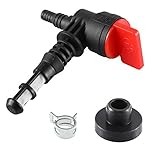
Supermotorparts 192980GS Fuel Shut Off Valve Service Kit w/Grommet Bushing Plastic Gas Tank

YAMAKATO Predator 9000 8750 4000 4375 Generator Fuel Tank Shut Off Valve
About GeneratorStop.com
We are your #1 power generator guide and resource online. We are dedicated on providing you the best and most useful generator related articles, reviews and tools. learn more...