


Why Generator Carburetors Get Clogged in Storage
* This site contains affiliate links for which we may be compensated.
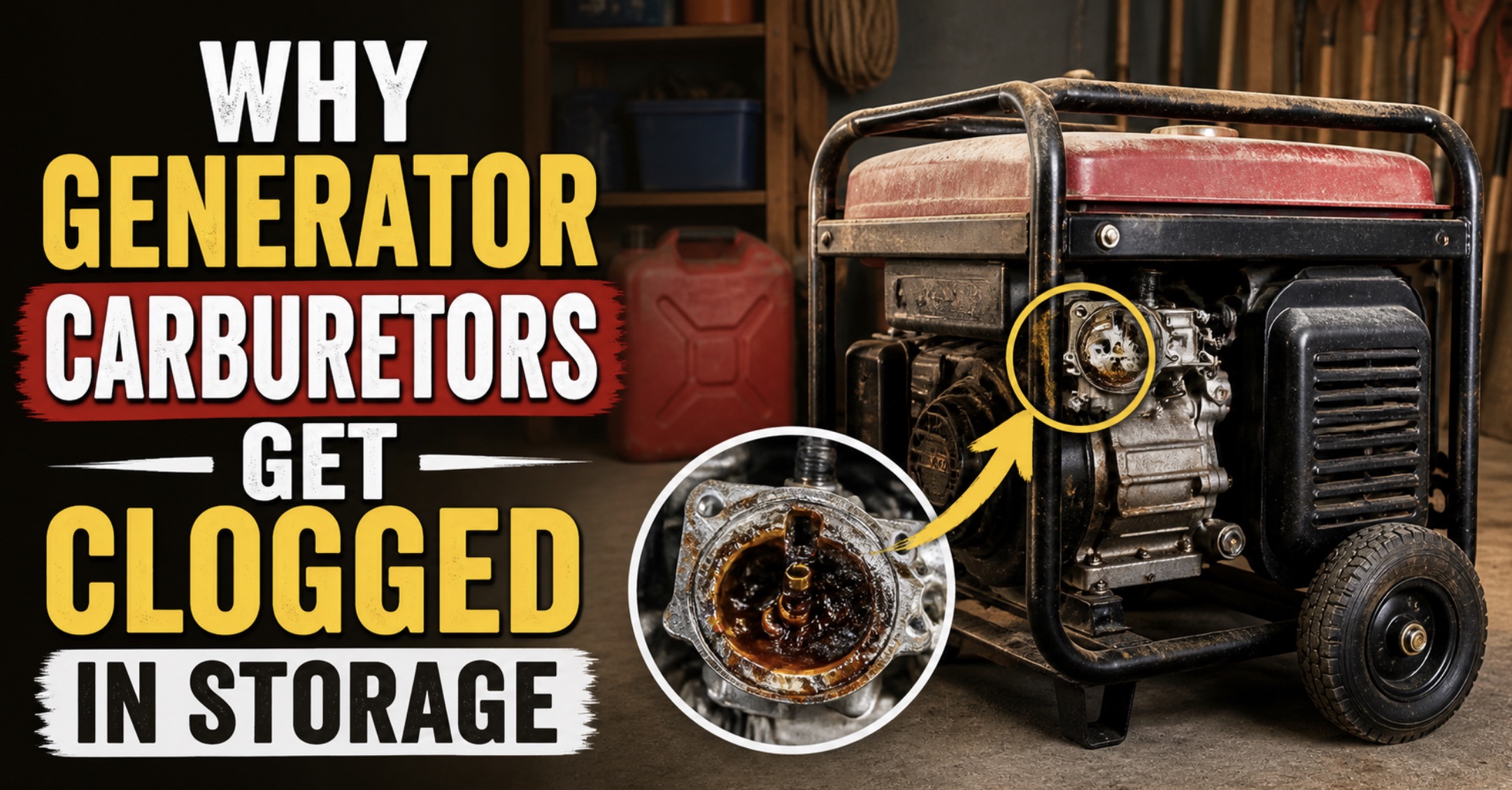
A generator carburetor can look perfectly fine from the outside and still become badly clogged after sitting in storage. That is one of the most frustrating parts of generator ownership: the machine may have run well the last time you used it, but after a few weeks or months of sitting, it suddenly will not start, only runs on choke, surges, sputters, or dies as soon as the choke is opened. In many cases, the carburetor is the main reason.
The carburetor is responsible for mixing fuel and air in the right ratio before that mixture enters the engine. It does this through tiny passages, jets, and metering circuits. Those passages work well when fuel is fresh and flowing properly, but they do not tolerate stale fuel, evaporated residue, water contamination, or long periods of neglect very well. Because the openings inside the carburetor are so small, it does not take much varnish or debris to restrict fuel flow enough to create starting and running problems.
For a broader troubleshooting overview that puts the carburetor in context with the rest of the machine, start with Generator Parts and Repairs.
What Actually Happens to Fuel During Storage
Gasoline does not stay fresh forever. Once fuel sits in a generator tank or carburetor bowl for too long, especially if it contains ethanol, it begins to change chemically. Some of the lighter compounds evaporate, leaving behind heavier residues. Over time, those residues become sticky and start coating the inside of the carburetor.
That sticky film is often described as varnish or gum. It can collect in places like:
- The main jet
- The pilot or idle jet
- The float needle and seat
- Small air-bleed passages
- The emulsion tube
Because these openings are so small, even a little buildup can be enough to lean out the mixture or stop fuel flow almost completely. This is why a generator may still have fuel in the tank but refuse to run properly.
Why the Carburetor Gets Hit Harder Than Other Fuel Parts
People often assume that if the fuel tank is dirty, the tank must be the main source of the problem. But the carburetor is usually where trouble shows up first because it is the most precise and delicate part of the fuel system.
A fuel tank can tolerate some old gas without immediately becoming unusable. A fuel line can tolerate some residue before flow is badly affected. The carburetor cannot. Its job depends on tiny calibrated openings, and those passages are exactly where dried fuel residue loves to settle.
That is why storage problems tend to show up as carburetor symptoms rather than obvious tank symptoms.

STA-BIL Fast Fix Small Engine Treatment, 8 oz

Gumout 510011 Multi-System Tune-Up, Fuel Stabilizer Injector Cleaner & Gas Treatment, 16 oz, Full Fuel System Cleaner - Improves Engine Performance, Cleans & Removes Deposits and Residue

STA-BIL Storage Fuel Stabilizer, 16 oz
Ethanol-Blended Fuel Makes Storage Problems Worse
Modern pump gas often contains ethanol, and that matters a lot for stored generators. Ethanol attracts moisture from the air. During storage, especially in humid conditions, that moisture can build up in the fuel system. Over time, this can lead to phase separation, where the fuel and absorbed water begin to separate.
When that happens, the generator may end up pulling a poor-quality fuel mix into the carburetor. Water contamination and ethanol-related residue can both contribute to clogging, corrosion, and erratic running.
This is one of the biggest reasons generator owners who store fuel for emergency use often rely on a generator fuel stabilizer and try to avoid leaving untreated gas sitting inside the carburetor for long periods.
The Carburetor Bowl Is a Trouble Spot
One reason carburetors clog in storage is that the bowl underneath the carburetor often holds a small amount of fuel even after the generator has been shut off. That fuel just sits there. It does not circulate, it does not refresh itself, and it slowly evaporates.
As it evaporates, the heavier components remain behind. That is why the bowl, jets, and lower internal passages are common places to find varnish, sticky deposits, and fine debris.
If a generator is stored for months with fuel left in the carburetor, the bowl is often one of the first places where trouble begins.
Small Idle Jets Clog First
A very common pattern is that the smallest jets clog before the larger fuel passages do. This is why a generator with a partially clogged carburetor may behave in confusing ways.
For example, it may:
- Start only with full choke
- Run for a few seconds and die
- Surge at idle
- Run rough at low load but improve slightly at higher throttle
- Need repeated priming or starting attempts
These are classic signs that the carburetor’s smaller metering circuits are restricted. If your generator is already acting that way, the related guide Generator Won’t Start After Sitting? Here’s Why connects those symptoms to the most common storage-related causes.
Why a Generator May Still Run on Choke
One of the most misunderstood carburetor symptoms is a generator that only runs with the choke partially or fully on. Many people think that means the choke is the problem. Usually, it means the carburetor is starved for fuel.
The choke restricts incoming air, which enriches the mixture. That richer mixture helps compensate for a clogged jet or restricted passage. So when the generator only stays alive on choke, it is often because the carburetor is not delivering enough fuel under normal airflow conditions.
That is not a sign of a healthy carburetor. It is a strong clue that internal passages are dirty or restricted.
Storage Conditions Matter More Than People Think
The speed at which a carburetor clogs in storage depends on more than just time. Storage conditions matter too.
A carburetor is more likely to develop problems when:
- The generator is stored with untreated gasoline
- The storage area is humid
- The fuel used contains ethanol
- The machine sits for months without being exercised
- The carburetor bowl is never drained before seasonal storage
A generator stored in a damp garage with old gas in the bowl may develop carburetor trouble much faster than one stored dry with treated fuel and occasional run time.
Debris and Corrosion Can Add to the Problem
Not every clogged carburetor is clogged only by dried fuel. Debris from old fuel cans, rust from a metal tank, deteriorating fuel lines, and tiny particles from the tank or petcock can all migrate into the carburetor.
Moisture can also create corrosion inside metal carburetor parts. Once corrosion starts in tiny passages or around precision surfaces, the carburetor may not respond well to simple flushing. In those cases, cleaning becomes more involved, and replacement may sometimes be easier than trying to restore a badly corroded carb.
This is one reason people often keep spare parts like a replacement generator carburetor, a generator fuel filter, or a generator spark plug on hand if the machine is relied on for outage backup.
Why “Running It Dry” Helps but Does Not Always Solve Everything
Many people try to prevent storage clogs by shutting off the fuel valve and letting the generator run until it dies. That can help because it reduces the amount of fuel left in the carburetor. But it does not always remove every drop of fuel from the bowl and passages.
So while running the carburetor dry is a good habit on many generators, it is not magic. A small amount of fuel may still remain, and over a long enough storage period, that residue can still dry out and form deposits.
The best storage approach is usually a combination of fresh treated fuel, proper shutdown, and draining the carburetor bowl when the design allows it.

Valchoose Carburetor Cleaning Kit, Multi-Size Jet Clean Tools, 1 Set

Carburetor Cleaning Kit, 33Pcs Stainless Steel Carburetor Jet Cleaning Tool

60-Piece Carburetor Cleaning Brush & Dirt Jet Cleaner Tool Kit, Micro Wire Needles with Aluminum Carrying Case & Hex Wrenches for Small Engine Repair, Motorcycle, ATV, Weed Eater and Airbrush
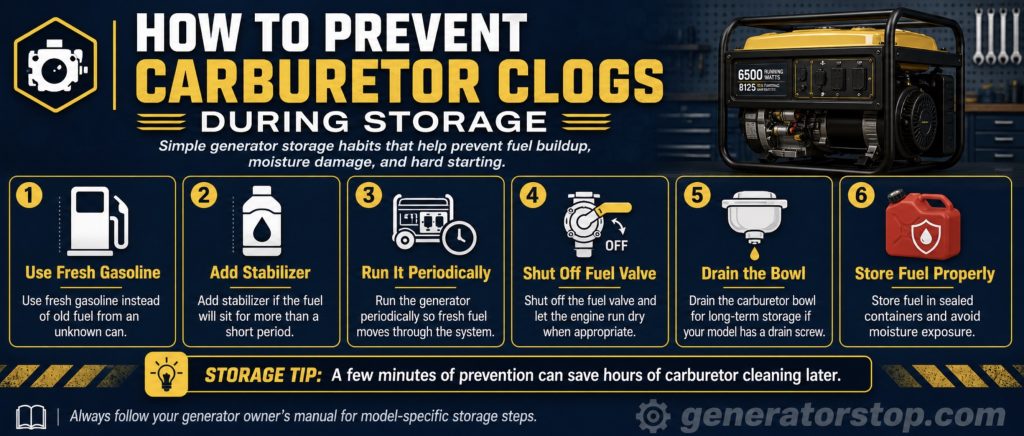
How to Prevent Carburetor Clogs During Storage
Preventing carburetor trouble is much easier than cleaning one after it is already clogged. A few habits make a huge difference:
- Use fresh gasoline instead of old fuel from an unknown can.
- Add stabilizer if the fuel will sit for more than a short period.
- Run the generator periodically so fresh fuel moves through the system.
- Shut off the fuel valve and let the engine run dry when appropriate.
- Drain the carburetor bowl for long-term storage if your model has a drain screw.
- Store fuel in sealed containers and avoid moisture exposure.
If you want a more hands-on walk-through for fixing a dirty carburetor once problems have already started, see How to Clean a Carburetor on a Generator (Different Brands & Models).
When Cleaning Is Enough and When Replacement Makes More Sense
Not every clogged carburetor needs to be replaced. If the issue is mostly varnish or residue and the metal parts are still in decent condition, cleaning can often restore normal operation.
But if the carburetor is heavily corroded, the float needle no longer seals properly, the jets are damaged, or the body is deteriorated, replacement may be the more practical solution. This is especially true on smaller portable generators where aftermarket carburetors are inexpensive and labor time matters.
A careful cleaning often works. A badly neglected carburetor, however, can become more trouble than it is worth.
Why This Problem Keeps Catching Owners Off Guard
Carburetor clogging feels random to many owners because the generator often seemed fine when it was put away. But storage damage is slow and quiet. The fuel changes while the machine is sitting still. No part looks obviously broken from the outside. Then the next time the generator is needed, the engine suddenly refuses to cooperate.
That is why carburetor storage problems are so common in emergency generators: they are often stored for long periods, then expected to work immediately during a storm or outage.
Summary
Generator carburetors get clogged in storage because gasoline degrades, lighter compounds evaporate, sticky varnish forms, ethanol pulls in moisture, and tiny carburetor passages trap residue faster than larger fuel-system parts do. The carburetor is one of the most delicate and fuel-sensitive parts of the generator, so it often shows storage damage first. The best prevention is simple: use fresh treated fuel, avoid long periods with old gas sitting in the carburetor, run the generator regularly, and drain the bowl for long-term storage when possible.

Savior Generator Petcock Gas Fuel Tank Shut Off Valve for Champion Generac

WOTIAN Pull Start Assembly Compatible with Champion 389cc 420cc 439cc 459cc 5500w 7500w 9000w Generator Parts Engine Recoil Starter Part#46.061000.00

YAMAKATO 5~8KW Generator AVR Automatic Voltage Regulator Rectifier

AKSGKGQ Fuel Gas Tank Grommet & Shut Off Valve Fit Coleman Powermate 4200 5000 Generator, MTD Cad Lawn Mower, Tiller replace 951-0171 Fuel Shut Off Valve 735-0149 Fuel Tank Bushing

4~8.5KW Generator AVR Automatic Voltage Regulator Rectifier for Predator Honda Champion Duromax Firman Generac 4000 5000 5500 6000 6500 7000 7500 8000 8500 Watt 338cc-459cc Engines
About GeneratorStop.com

We are your #1 power generator guide and resource online. We are dedicated on providing you the best and most useful generator related articles, reviews and tools. learn more...