


Generator Pull Cord Won’t Retract? Fix It Fast
* This site contains affiliate links for which we may be compensated.
A generator pull cord that will not retract is one of those problems that feels minor right up until the moment you need the generator and cannot get the starter rope back into the housing. Sometimes the rope hangs out loose and limp. Sometimes it retracts only halfway. Sometimes it feels jammed, tangled, or rough. In most cases, the problem is inside the recoil starter assembly, and the good news is that many of these issues are fixable at home with basic hand tools, patience, and a little care around the spring.
The most common causes are a worn or broken recoil spring, a frayed or swollen rope, a jammed pulley, a damaged handle knot, or starter pawls that are hanging up. Dirt, rust, and long storage can make the whole system stick as well. The key is to diagnose which part is actually causing the trouble before you start buying parts or taking the recoil housing apart blindly.
For a broader overview of generator repair and common parts, it helps to keep Generator Parts and Repairs handy as a general reference point.
How the Pull Cord Retraction System Works
The pull cord on a generator is part of a recoil starter system. When you pull the handle, the rope spins a pulley inside the recoil housing. That pulley winds against a flat recoil spring. When you release the rope, the spring rewinds the pulley and pulls the rope back into the housing.
That means the rope retracts only if all of these things are working together properly:
- The rope is intact and routed correctly
- The pulley turns freely
- The recoil spring still has tension and is anchored properly
- The housing is not packed with debris or rust
- The handle knot is not snagging or oversized
If any one of those pieces fails, the rope may stop retracting normally.
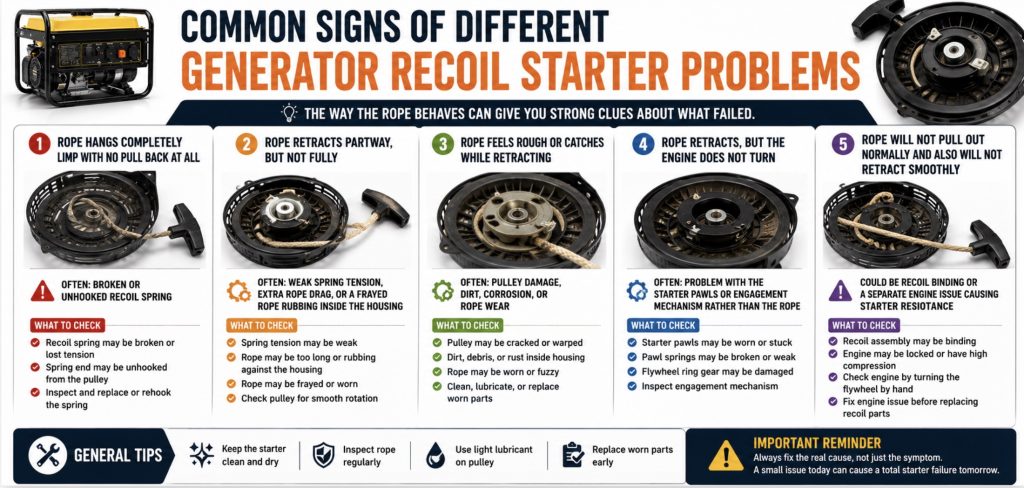
Common Signs of Different Recoil Starter Problems
The way the rope behaves can give you strong clues about what failed.
- Rope hangs completely limp with no pull back at all: often a broken or unhooked recoil spring.
- Rope retracts partway, but not fully: often weak spring tension, extra rope drag, or a frayed rope rubbing inside the housing.
- Rope feels rough or catches while retracting: often pulley damage, dirt, corrosion, or rope wear.
- Rope retracts, but the engine does not turn: often a problem with the starter pawls or engagement mechanism rather than the rope itself.
- Rope will not pull out normally and also will not retract smoothly: could be recoil binding or a separate engine issue causing starter resistance.
That last point matters, because sometimes what feels like a recoil starter problem is actually engine resistance from a mechanical or hydro-lock issue.
Rewind Starter Repair Kit For Briggs and Stratton, Includes 692299 Friction Plate With 2 Springs, 2 281505 Pawls, 691696 Screw, and 263073 Retainer Spring r

100075051-0001 Recoil Starter Assembly fit for Pulsar PG2300iS 2300W GT-148 Pull Start 636996002 Replacement for Champion 2500W Inverter Generator Model #201122 for Ryobi RYi2300BTA RYi2300 RYi2300BT

56225-1201 Recoil Starter Assembly Replacement for WEN 56225i 56200i Portable Inverter Generator Replace 56200-1201 Replacement for Predator Inverter Generator Surge 2000 Watt (SKU# 71343, 59135)
Safety Before You Open the Recoil Housing
The recoil starter looks simple from the outside, but the spring inside can snap loose with surprising force if you are careless. Before opening anything:
- Turn the generator off and let it cool.
- Disconnect the spark plug wire so the engine cannot start accidentally.
- Work on a clean bench or flat surface so small parts do not get lost.
- Wear eye protection if you are opening the recoil spring area.
- Take photos as you go so reassembly is easier.
If you are not comfortable dealing with a loaded recoil spring, replacing the entire recoil starter assembly can sometimes be easier than rebuilding it piece by piece.
Step 1: Check the Rope and Handle First
Before removing the housing, inspect the obvious external parts.
- Look for fraying, swelling, or melted spots on the rope.
- Check whether the handle knot is bulky or jammed at the housing opening.
- See whether the rope is rubbing badly at the exit hole.
- Pull the rope slowly and watch whether it tracks smoothly.
A rope that has become fuzzy, stiff, or partially unraveled can drag enough to prevent full retraction. In that case, a simple generator starter rope replacement may solve the issue without deeper repair.
Step 2: Remove the Recoil Starter Housing
If the outside inspection does not reveal the problem, remove the recoil starter assembly from the engine shroud. Most portable generators hold it on with a few screws or bolts.
Once removed, inspect:
- The pulley for cracks, warping, or broken rope guides
- The spring area for obvious breakage or loose spring ends
- The rope path for tangles or improper winding
- The starter pawls or dogs for wear or sticking
- The housing for dirt, rust, spider nests, or debris
In many cases, the problem becomes obvious once the housing is off.
Step 3: Identify Whether the Recoil Spring Has Failed
The recoil spring is one of the most common failure points. It can break, lose tension, pop loose from its anchor point, or become kinked inside the housing.
Signs of spring trouble include:
- No retraction force at all
- A spring end visibly out of place
- A scraping or loose metallic sound inside the housing
- Rope retracting weakly even though the rope and pulley look fine
If the spring is only unhooked and not broken, you may be able to reseat it and rewind tension. If it is cracked or distorted, replacement is usually the better answer.
Step 4: Re-Tension the Recoil Spring if It Is Still Good
Sometimes the spring is intact, but the pulley has lost preload. In that case, the fix is re-tensioning the starter.
The general process is:
- Remove slack from the rope if needed.
- Turn the pulley in the direction that loads the spring.
- Preload the spring enough to allow full rope retraction without over-stressing it.
- Feed the rope back through and tie it securely.
This step can be fiddly, but it often restores normal operation when nothing is actually broken. The key is not to over-wind the spring or let the pulley snap backward uncontrolled.
If your generator has also been sitting unused for a long time, it is worth reviewing Generator Won’t Start After Sitting? Here’s Why, because recoil issues and general storage neglect often show up together.
Step 5: Replace a Worn or Frayed Starter Rope
Starter rope is cheap, and a tired rope can create more problems than people expect. A rope that is too thick, too thin, fuzzy, or water-damaged may not wind cleanly on the pulley.
When replacing the rope:
- Match the rope diameter closely to the original.
- Use a heat-sealed or melted rope end to make threading easier.
- Tie secure knots that are not oversized.
- Check that the rope winds evenly onto the pulley.
A fresh recoil starter rope and handle kit is often one of the cheapest fixes for poor retraction.
Step 6: Clean and Lubricate Only Where Appropriate
Dirt and rust can make the pulley drag or cause the pawls to stick. Cleaning helps, but do not over-lubricate the recoil spring cavity.
Good practice is to:
- Brush out dirt and debris from the housing.
- Clean pivoting pawls if they are sticky.
- Use light lubrication sparingly on moving pivots if needed.
- Avoid soaking the recoil spring area in oil that will just trap dust and gum up later.
If the generator has seen long storage, moisture, or fuel-system neglect, some of that same neglect may also be affecting starting behavior elsewhere. In that case, a related guide like How to Clean a Carburetor on a Generator (Different Brands & Models) may become relevant once the rope issue is fixed.

Recoil Starter for Champion 212cc 196cc 224cc Pull Start Assembly 3500w 4000w 4500w Generator Parts with Pull Cord Rope

YAMAKATO Recoil Starter Spring 28442-ZE2-W01 for Honda GX240 - GX390

Recoil Starter Assembly Fit for WEN 56202i 56203i 56235i Super Quiet 2000W
Step 7: Check the Starter Pawls and Engagement
A pull cord problem is not always just about retraction. Sometimes the rope retracts poorly because the engagement parts are dragging or hanging up.
Inspect the starter pawls or dogs for:
- Cracks
- Heavy wear
- Broken return springs
- Sticky movement from dirt or corrosion
If the pawls are slow to retract or do not disengage cleanly, they can make the whole starter feel rough and inconsistent.
When the Problem Is Not the Recoil Starter at All
Sometimes the rope will not retract properly because the engine is difficult to turn, not because the recoil mechanism itself is bad. This can happen if:
- The engine is partially seized
- The cylinder is hydro-locked with fuel or oil
- An internal engine problem is creating excessive resistance
- The flywheel area has debris or mechanical interference
If the recoil housing is off and the starter assembly works smoothly by itself, but bolted back on it becomes hard to pull or retract, that is a clue to look at the engine side as well.
When Replacing the Whole Recoil Assembly Makes More Sense
In some cases, rebuilding the recoil starter is more hassle than it is worth. Replacing the entire assembly is often smarter when:
- The spring is badly damaged
- The pulley is cracked
- Multiple internal parts are worn
- The housing is bent or distorted
- A complete replacement assembly is inexpensive and easy to find
For many popular generator brands, a complete generator recoil starter assembly is available and may save you time compared with fighting a damaged spring.
How to Prevent Pull Cord Problems in the Future
Once you fix it, a few habits can help keep the recoil starter working well:
- Do not let the handle snap back violently every time you start the generator.
- Store the generator in a dry place so rust does not build inside the housing.
- Inspect the rope periodically for fraying before it fails completely.
- Keep the housing area reasonably clean and free of nests or debris.
- Address hard-starting engine problems early so the recoil starter is not overstressed.
A recoil starter usually lasts much longer when it is not being yanked against engine problems that should have been fixed earlier.
Summary
A generator pull cord that will not retract usually points to a recoil starter issue such as a weak or broken spring, a frayed rope, a jammed pulley, or sticky starter pawls. The fastest fix starts with the basics: inspect the rope and handle, remove the recoil housing, check the spring and pulley, and replace worn parts before they damage other pieces. In many cases, the repair is straightforward and inexpensive, especially if you catch it before the rope snaps or the spring comes apart completely.
Savior Generator Petcock Gas Fuel Tank Shut Off Valve for Champion Generac

WOTIAN Pull Start Assembly Compatible with Champion 389cc 420cc 439cc 459cc 5500w 7500w 9000w Generator Parts Engine Recoil Starter Part#46.061000.00

4~8.5KW Generator AVR Automatic Voltage Regulator Rectifier for Predator Honda Champion Duromax Firman Generac 4000 5000 5500 6000 6500 7000 7500 8000 8500 Watt 338cc-459cc Engines

YAMAKATO 5~8KW Generator AVR Automatic Voltage Regulator Rectifier
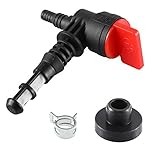
Supermotorparts 192980GS Fuel Shut Off Valve Service Kit w/Grommet Bushing Plastic Gas Tank
About GeneratorStop.com
We are your #1 power generator guide and resource online. We are dedicated on providing you the best and most useful generator related articles, reviews and tools. learn more...