


How to Maintain and Repair Your Generator for Hurricane Season
* This site contains affiliate links for which we may be compensated.
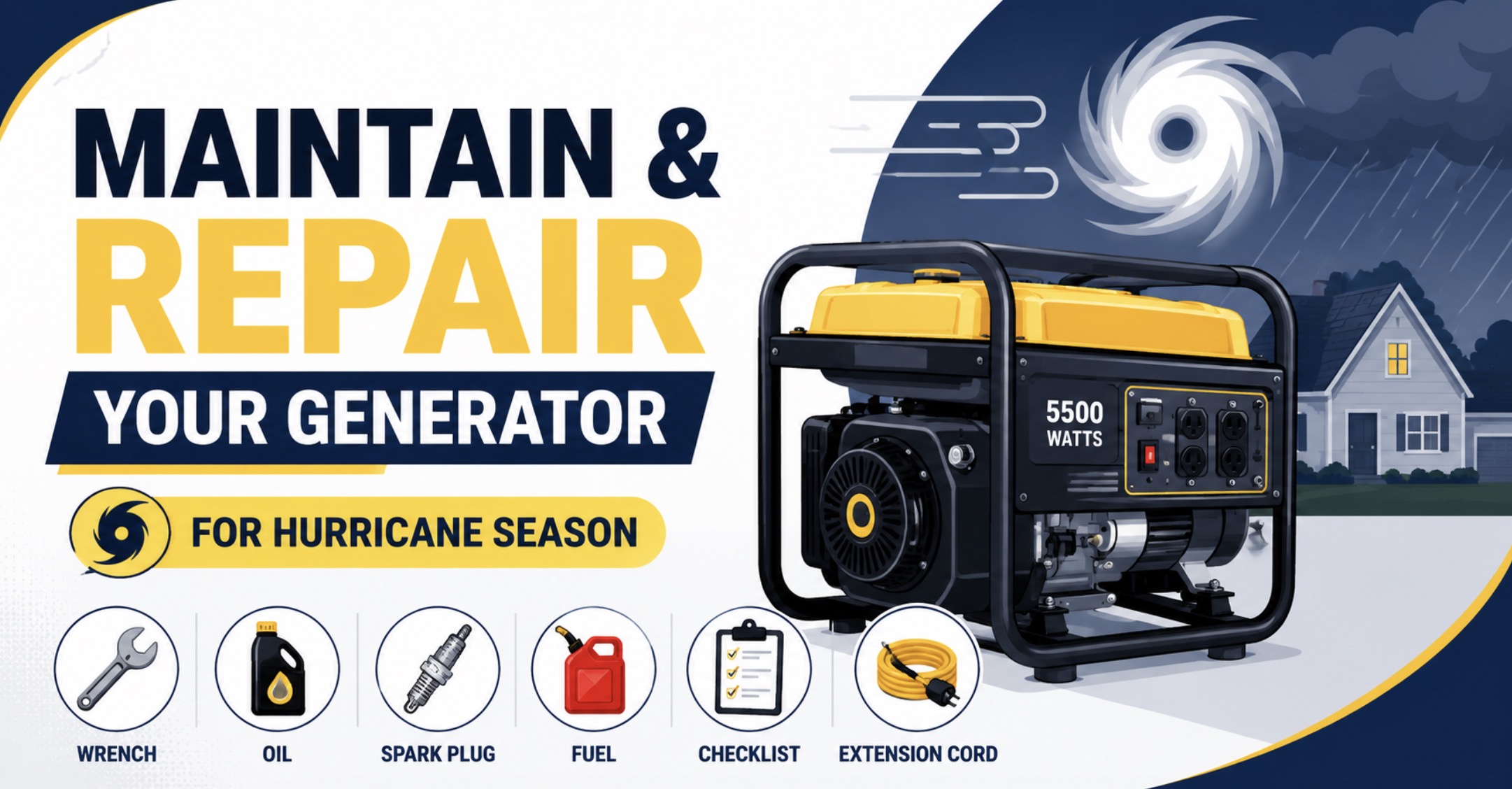
Hurricane season is one of the worst times to discover that your generator will not start, keeps shutting off, leaks fuel, trips the overload light, or cannot handle the appliances you need during an outage. A generator is not something you want to test for the first time when the storm is already outside and the power has already gone out. If you depend on a portable or standby generator for emergency power, it should be inspected, serviced, repaired, and tested before hurricane season arrives.
A well-maintained generator can keep refrigerators cold, charge phones, run fans, power medical devices, support lights, and help your household stay safer and more comfortable during an extended outage. A neglected generator, on the other hand, can become useless exactly when you need it most.
For a broader look at common generator parts, troubleshooting, and repair topics, you may also want to read Generator Parts and Repairs.
Why Generator Maintenance Matters Before Hurricane Season
Generators often sit unused for months. During that time, fuel can go stale, batteries can drain, oil can become dirty, carburetors can gum up, and small leaks can go unnoticed. Then, when a hurricane or tropical storm knocks out power, the generator is suddenly expected to run for hours or days.
That is why pre-season maintenance is not optional. It gives you time to find problems before parts, fuel cans, oil, spark plugs, and repair kits sell out locally.
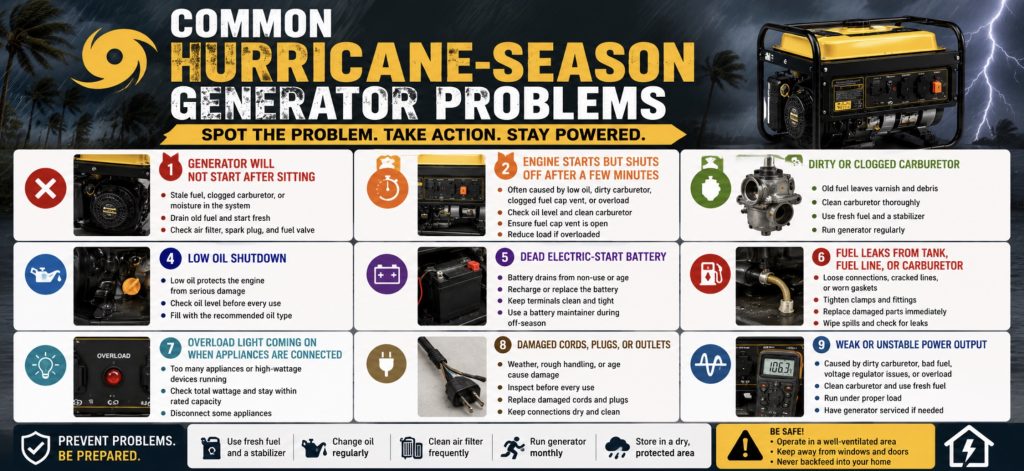
Common hurricane-season generator problems include:
- Generator will not start after sitting
- Engine starts but shuts off after a few minutes
- Dirty or clogged carburetor
- Low oil shutdown
- Dead electric-start battery
- Fuel leaks from the tank, fuel line, or carburetor
- Overload light coming on when appliances are connected
- Damaged cords, plugs, or outlets
- Weak or unstable power output
The goal is simple: make sure the generator can start, run, carry a load, and operate safely before the weather turns bad.
Start With a Complete Visual Inspection
Before changing oil or buying parts, give the generator a slow, careful inspection. Look at it like you are trying to find the problem before it finds you during an outage.
Check these areas:
- Fuel tank for rust, cracks, dents, or leaks
- Fuel cap and cap gasket
- Fuel shutoff valve
- Fuel line and clamps
- Carburetor bowl and drain screw area
- Oil fill cap, dipstick, and drain plug
- Air filter cover and air intake
- Spark plug wire
- Battery terminals on electric-start models
- Recoil pull cord and handle
- Outlets, breakers, and control panel
- Frame, wheels, handles, and rubber feet
Look for fuel stains, oil drips, cracked hoses, loose wires, mouse nests, corrosion, missing screws, broken plastic, and anything that looks burned or melted. Small issues found early are usually much easier to repair than failures that appear during emergency use.
Change the Oil Before Hurricane Season
Engine oil is one of the most important maintenance items on any generator. During hurricane season, a generator may run for long hours in hot, humid, stressful conditions. Dirty oil, low oil, or the wrong oil can increase wear and may even trigger the low-oil shutdown system.
A basic oil service should include:
- Checking the oil level on level ground
- Draining old oil if it is dirty or overdue
- Refilling with the correct oil type and amount
- Checking for leaks after the engine runs
- Keeping extra oil on hand for long outages
If you are unsure which oil to use, see 5W20 vs 5W30 vs 10W30 Oil – Which One to Use for Generators?.
It is smart to keep extra generator 10W-30 oil, a clean generator oil funnel kit, and a small oil drain pan with your storm supplies.
Check the Low-Oil Shutdown System
Many portable generators have a low-oil shutdown sensor. This sensor protects the engine by shutting it off if oil drops too low. That is helpful, but it can be confusing if the generator starts and then dies quickly.
Before hurricane season:
- Check the oil level carefully on flat ground.
- Make sure the oil is not below the safe mark.
- Do not overfill the crankcase.
- Watch for oil leaks around the drain plug and engine case.
- Run the generator briefly and confirm it does not shut off unexpectedly.
If your generator keeps shutting off even with a full oil level, the oil sensor, wiring, fuel flow, carburetor, or overload condition may need further troubleshooting.
Inspect and Refresh the Fuel System
Fuel problems are one of the biggest reasons generators fail during hurricane season. Gasoline can go stale, especially if it has been sitting in the tank or carburetor for months. Old fuel can leave varnish deposits that clog the carburetor jets and make the engine hard to start.
Before storm season, check:
- Fuel age and smell
- Fuel tank condition
- Fuel shutoff valve operation
- Fuel line cracks or hardness
- Fuel filter condition if your generator has one
- Carburetor bowl for residue or leaks
If the gas smells sour, looks dark, or has been sitting too long, drain it safely and refill with fresh fuel. Add a proper generator fuel stabilizer if the fuel may sit for more than a short period.
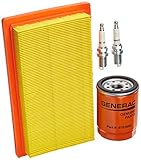
Generac 6485 Scheduled Maintenance Kit for 20kW and 22kW Standby Generators with 999cc Engine Black
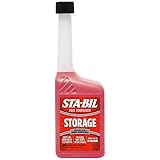
STA-BIL Storage Fuel Stabilizer, 10 oz

Generac 5777 Portable Maintenance Kit for 389cc Engines - Comprehensive Maintenance Solution
Clean or Replace the Air Filter
The air filter keeps dirt and debris out of the engine. If it is clogged, the generator may run rich, smoke, surge, lose power, or shut off under load.
To inspect the air filter:
- Remove the air filter cover.
- Check for dust, oil, moisture, and damage.
- Replace a dirty paper filter.
- Clean a foam filter only if your manual says it is washable.
- Make sure the filter is seated correctly before reinstalling the cover.
A spare generator air filter replacement is cheap, small, and worth keeping in your hurricane kit.
Check the Spark Plug
The spark plug is another small part that can cause big trouble. A worn or dirty spark plug can make the generator hard to start, especially after sitting.
Remove the spark plug and inspect it for:
- Heavy black carbon buildup
- Wet fuel fouling
- Oil fouling
- Cracked ceramic
- Worn electrode
- Incorrect gap
If the plug looks bad, replace it instead of trying to squeeze one more season out of it. Keep a spare generator spark plug with your tools so you are not stuck looking for one after stores close.
Test the Battery on Electric-Start Generators
Electric-start generators are convenient, but the battery can slowly discharge while the generator sits. If the battery is weak, the starter may click, crank slowly, or fail completely.
Before hurricane season:
- Fully charge the battery.
- Clean corrosion from the terminals.
- Tighten the battery cables.
- Test the electric start several times.
- Replace the battery if it is old or unreliable.
A 12V generator battery maintainer can help keep the battery ready between uses.
Inspect the Pull Cord and Recoil Starter
Even if your generator has electric start, the pull cord is an important backup. If the battery dies, the recoil starter may be your only way to start the generator.
Check the pull cord for:
- Fraying
- Stiffness
- Weak retraction
- Cracked handle
- Rope that does not pull smoothly
If the rope does not retract, the recoil spring may be weak, broken, or dirty. A replacement generator recoil starter assembly can sometimes be easier than rebuilding the old one part by part.
Run the Generator Before You Actually Need It
Starting the generator for a few seconds is not enough. Before hurricane season, run it long enough to know that it starts easily, idles smoothly, and carries a real load.
A useful test:
- Move the generator outdoors.
- Keep it far away from windows, doors, and vents.
- Start it and let it warm up.
- Plug in a moderate load.
- Listen for surging, sputtering, or rough running.
- Check that power is available at the outlets.
- Test breakers and reset buttons if equipped.
If the generator only runs with the choke on, surges under load, or dies after a few minutes, fix that before storm season gets serious.
Calculate Your Emergency Loads
A generator can only supply so much power. If you overload it, the breaker may trip, the overload light may come on, or the generator may shut down. Before a storm, decide which appliances truly matter.
Common emergency loads include:
- Refrigerator
- Freezer
- Phone chargers
- Wi-Fi router
- Lights
- Fans
- Sump pump
- Well pump
- Small cooking appliance
- Medical device if needed
Do not guess your wattage needs. Use Generator Load Calculation Sheet and Formula to help estimate what your generator can safely handle.
Inspect Extension Cords and Transfer Equipment
Your generator may be in good shape, but bad cords or unsafe connections can still create problems. Thin, damaged, or undersized cords can overheat and cause voltage drop.
Before hurricane season, inspect:
- Extension cords
- Plug ends
- Generator outlets
- Power inlet box
- Transfer switch
- Breaker panel connection if professionally installed
For safer storm use, consider a heavy-duty generator extension cord, a generator power inlet box, or a generator transfer switch kit if your setup is designed for home backup.

VEVOR 50 Amp Generator Cord and Power Inlet Box Kit, 25FT Generator Extension Cord NEMA 14-50P/SS2-50R STW 6/3+8/1 AWG with Twist Lock Connector, Pre-Drilled Inlet Box, ETL Listed

VEVOR Manual Transfer Switch, 50-Amp 10-Circuit, Prewired Generator Transfer Switch Kit with CS6375 Plug Power Inlet Box, Double-Throw Switch, NEMA 3R, Mechanical Watt Meter, for 12500W Generators

31406CWK Pro/Tran 30 Amp 6-Circuit Generator Transfer Switch Kit 7500 Watts Include Weatherproof Inlet Box, 10 Foot Power Cord, watt Meters
Repair Fuel Leaks Immediately
A fuel leak is not something to put off. Gasoline leaks can lead to fire, vapor buildup, and unsafe operation. If you smell fuel or see wet spots, shut the generator off and find the source.
Common leak points include:
- Fuel tank seam
- Fuel cap gasket
- Fuel shutoff valve
- Fuel line
- Carburetor bowl gasket
- Drain screw
Do not run a generator with an active fuel leak. Replace cracked lines, leaking valves, or damaged gaskets before the generator is used again.
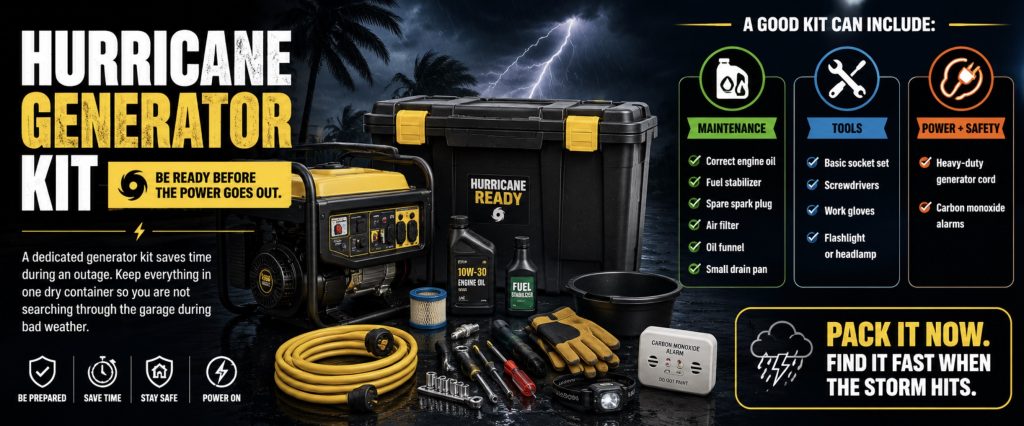
Prepare a Hurricane Generator Kit
A dedicated generator kit saves time during a power outage. Keep everything in one dry container so you are not searching through the garage during bad weather.
A good kit can include:
- Correct engine oil
- Fuel stabilizer
- Spare spark plug
- Air filter
- Oil funnel
- Small drain pan
- Basic socket set
- Screwdrivers
- Work gloves
- Flashlight or headlamp
- Heavy-duty generator cord
- Carbon monoxide alarms
A battery-powered carbon monoxide detector is one of the most important safety items you can keep with your hurricane supplies.
Never Run a Generator Indoors
Generator safety is just as important as generator repair. Never run a generator inside a house, garage, shed, basement, crawlspace, porch, or enclosed area. Carbon monoxide can build up quickly and can be deadly.
Safe generator placement means:
- Run it outdoors only.
- Keep it far away from doors, windows, and vents.
- Point exhaust away from the home.
- Use carbon monoxide alarms indoors.
- Let the generator cool before refueling.
If you need rain protection, do not move the generator indoors. Use a properly ventilated generator running cover for rain designed for operating conditions.
Store Fuel Safely
Fuel storage is a major part of hurricane generator readiness. During a storm, gas stations may close, lose power, or run out of fuel. But storing gasoline carelessly can also create risks.
Good fuel storage habits include:
- Use approved fuel cans only.
- Label fuel cans with the purchase date.
- Add stabilizer when storing fuel.
- Rotate old fuel into vehicles or equipment before it gets stale.
- Keep fuel away from living areas.
- Store fuel away from sparks, flames, and heat sources.
- Never refuel a hot generator.
If you use propane with a dual-fuel generator, check your propane hoses, regulator, and tank levels before hurricane season begins.
After the Storm: Do Post-Use Maintenance
When utility power comes back, do not just roll the generator into storage and forget about it. Long outage use can be hard on the engine.
After hurricane use:
- Let the generator cool.
- Check the oil level.
- Inspect for leaks.
- Clean dirt and debris from the housing.
- Check cords and plugs for heat damage.
- Refill, stabilize, or drain fuel depending on your storage plan.
- Record how many hours it ran.
If the generator ran for many hours, it may already be due for another oil change.
When to Get Professional Help
Some generator repairs are safe for many DIY owners. Others are better handled by a technician or electrician.
Get help if:
- The generator has no electrical output.
- Outlets are melted or burned.
- You smell fuel but cannot find the leak.
- The engine knocks or smokes heavily.
- The generator repeatedly trips breakers under light load.
- You need a transfer switch installed.
- The generator is under warranty and deeper disassembly may void coverage.
Do not improvise electrical connections during a power outage. Backfeeding a home through a dryer outlet or other unsafe connection can injure utility workers, damage equipment, and create serious fire hazards.
Summary
Maintaining and repairing your generator before hurricane season is one of the smartest ways to prepare for a power outage. Change the oil, inspect the fuel system, clean or replace the air filter, check the spark plug, charge the battery, inspect cords, test the generator under load, and prepare a storm kit with the parts and tools you are most likely to need. Most importantly, fix problems before the storm arrives. A generator that is serviced, tested, and ready before hurricane season is far more likely to keep your home powered safely when the grid goes down.
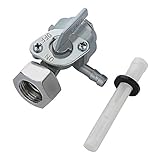
Savior Generator Petcock Gas Fuel Tank Shut Off Valve for Champion Generac

WOTIAN Pull Start Assembly Compatible with Champion 389cc 420cc 439cc 459cc 5500w 7500w 9000w Generator Parts Engine Recoil Starter Part#46.061000.00
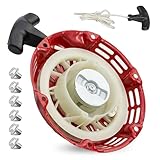
BlueStars 212CC Pull Start Recoil Starter - for Harbor Freight Predator

AKSGKGQ Fuel Gas Tank Grommet & Shut Off Valve Fit Coleman Powermate 4200 5000 Generator, MTD Cad Lawn Mower, Tiller replace 951-0171 Fuel Shut Off Valve 735-0149 Fuel Tank Bushing
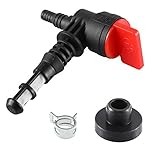
Supermotorparts 192980GS Fuel Shut Off Valve Service Kit w/Grommet Bushing Plastic Gas Tank
About GeneratorStop.com
We are your #1 power generator guide and resource online. We are dedicated on providing you the best and most useful generator related articles, reviews and tools. learn more...