


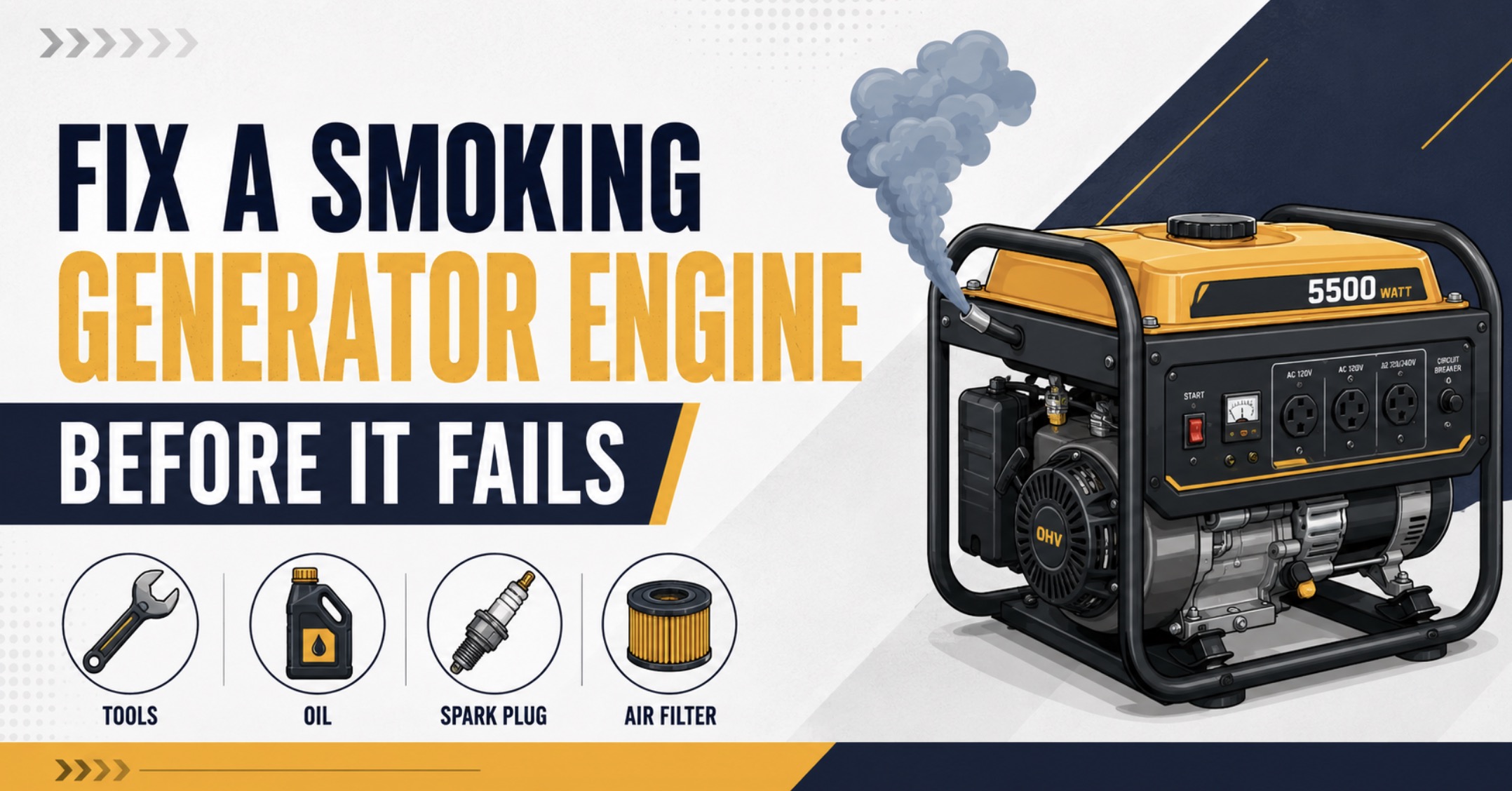
How to Fix a Smoking Generator Engine Before It Fails Completely
* This site contains affiliate links for which we may be compensated.
A smoking generator engine is a warning sign you should not ignore. A little smoke at startup may not always mean disaster, especially if the generator has been sitting for a while, but steady smoke, thick smoke, burning oil smell, or smoke that gets worse under load can point to problems that may eventually destroy the engine. The sooner you identify the color, smell, and timing of the smoke, the better your chance of fixing the generator before it fails completely.
Generator smoke can come from oil burning, too much fuel, a clogged air filter, overfilled oil, worn piston rings, a bad breather system, carburetor problems, or even spilled oil burning off the muffler. The key is not to guess. Start with simple checks first, then move deeper only if the easy fixes do not solve the problem.
For a broader look at generator parts, repairs, and common failure points, see Generator Parts and Repairs.
First, Identify the Smoke Color
The color of the smoke tells you a lot about what is happening inside the engine. Before taking anything apart, start the generator outdoors, let it run briefly, and observe the smoke carefully.
Common smoke colors include:
- Blue or blue-gray smoke: usually means the engine is burning oil.
- Black smoke: usually means the engine is running too rich, getting too much fuel, or not getting enough air.
- White smoke: may be condensation, oil burning, water contamination, or in some cases fuel vapor, depending on smell and duration.
- Light smoke only at startup: may be minor and temporary, especially after storage.
- Heavy smoke that continues: should be treated as a serious warning sign.
Do not keep running the generator for a long time while it is smoking heavily. If the smoke is thick, the engine sounds bad, oil is leaking, or the generator smells like burning plastic or fuel, shut it down and inspect it before continuing.
Blue Smoke: The Engine Is Likely Burning Oil
Blue smoke is one of the most important warning signs because it usually means oil is getting into the combustion chamber and burning with the fuel-air mixture. That can happen for simple reasons, such as too much oil in the crankcase, or more serious reasons, such as worn piston rings or valve guides.
Common causes of blue smoke include:
- Overfilled engine oil
- Generator tilted during use or transport
- Oil entering the air box through the breather tube
- Worn piston rings
- Worn valve seals or valve guides
- Incorrect oil viscosity
- Long-term wear from poor maintenance
The first thing to check is the oil level. Put the generator on flat ground, let it sit for a few minutes, and check the dipstick according to the owner’s manual. If the oil is above the full mark, drain the excess. Running a generator with too much oil can cause smoking, fouled spark plugs, air filter contamination, and rough running.
If you need supplies for basic oil service, a bottle of generator 10W-30 oil, a generator oil funnel kit, and a small generator oil drain pan are useful to keep with your repair tools.
Check Whether the Oil Is Overfilled
Overfilled oil is one of the easiest smoking-generator problems to fix. Many owners accidentally overfill small engines because generator oil capacity is often much smaller than expected. Adding “just a little more” can be enough to push the level too high.
Signs of overfilled oil include:
- Blue or gray smoke from the exhaust
- Oil in the air filter box
- Oil dripping from the breather tube
- Rough running after an oil change
- Spark plug fouling soon after startup
To fix it:
- Shut the generator off and let it cool.
- Place it on level ground.
- Check the oil level properly.
- Drain small amounts until the level is correct.
- Clean any oil from the air box and filter area.
- Restart the generator outdoors and watch whether the smoke clears.
If the smoke improves after correcting the oil level, you likely caught the problem before major damage occurred.
Use the Correct Oil Type
Wrong oil viscosity can also contribute to smoke, especially in hot weather, cold starts, or older engines. Oil that is too thin may pass worn rings more easily, while oil that is too thick can create startup lubrication problems in colder conditions.
If you are unsure what oil to use, read 5W20 vs 5W30 vs 10W30 Oil – Which One to Use for Generators?. The correct oil depends on the generator model, engine design, and operating temperature.
Do not mix random leftover oils just to “top it off.” Use the type and amount recommended for your generator.

Generac 0J93230SSM 20Kw-22Kw SM 999 Maintenance Kit (Synthetic Oil)

Generac 5W-20 Maintenance Kit for 20Kw-26Kw 999cc Generators (Replaces A0002074712)
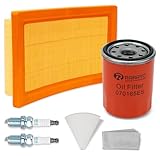
RARAYC 6485 Maintenance Kit Compatible with Generac 16KW 20KW 22KW 24KW 26KW Cooled Generators 999cc Engine with Paper Funnel Oil Wipe Replace Part Number 0J8478S Air Filter 070185E Oil Filter
Black Smoke: The Generator Is Running Too Rich
Black smoke usually means the engine is burning too much fuel or not getting enough air. This is often easier to fix than blue smoke because it commonly involves the air filter, choke, carburetor, or fuel system rather than major internal engine wear.
Common causes of black smoke include:
- Dirty or clogged air filter
- Choke stuck closed or partly closed
- Dirty carburetor
- Float needle not sealing properly
- Carburetor adjusted too rich
- Fuel contamination
- Blocked air intake
If the generator is producing black smoke and running rough, start with the air filter. A clogged air filter restricts airflow, which makes the fuel mixture too rich. The engine may run, but it may smoke, surge, foul the spark plug, and waste fuel.
Inspect and Replace the Air Filter
Remove the air filter cover and inspect the filter. A paper filter that is oily, wet, dusty, torn, or packed with debris should be replaced. A foam filter may be washable depending on the model, but it should not be dripping with oil or falling apart.
A bad air filter can cause:
- Black exhaust smoke
- Rough running
- Loss of power under load
- Poor fuel economy
- Spark plug fouling
A fresh generator air filter replacement is inexpensive and should be part of your basic maintenance kit.
Check the Choke Position
A generator should usually start with the choke on, then move to run once the engine warms up. If the choke stays partly closed after startup, the engine may run too rich and smoke black.
Check whether:
- The choke lever moves freely.
- The choke plate opens fully when set to RUN.
- The linkage is not bent or stuck.
- The choke is not being held closed by dirt or corrosion.
If the generator only runs with the choke on, that often points to a dirty carburetor or fuel-flow problem, not a reason to leave the choke closed forever. For a related troubleshooting path, see How to Clean a Carburetor on a Generator (Different Brands & Models).
Carburetor Problems That Cause Smoke
A dirty or malfunctioning carburetor can cause both black smoke and rough running. If the float needle sticks, the carburetor may allow too much fuel into the bowl. If jets or air passages are dirty, the fuel-air mixture can become unstable.
Carburetor-related smoke symptoms include:
- Black smoke from the exhaust
- Fuel smell from the muffler
- Engine surging
- Generator running only on choke
- Wet or black spark plug
- Fuel dripping from the carburetor area
If cleaning does not help, a replacement generator carburetor or a generator carburetor cleaner may be the next practical step.
White Smoke: Temporary or Serious?
White smoke can be confusing because it does not always mean the same thing. A little white vapor at startup may simply be moisture burning off, especially in cool or humid weather. But thick white smoke that continues can point to oil, water contamination, fuel issues, or a serious engine problem.
Possible causes of white smoke include:
- Condensation in the exhaust
- Generator stored in damp conditions
- Oil entering the combustion chamber
- Water contamination in fuel
- Overfilled oil
- Engine wear
If the white smoke disappears after a short warm-up and the generator runs normally, it may not be serious. If it continues, smells oily, or comes with rough running, shut the generator down and inspect further.
Check the Spark Plug for Clues
The spark plug can tell you a lot about what is happening inside the engine. Remove it and inspect the tip.
Spark plug clues:
- Dry, light tan or gray: often normal.
- Black and dry: rich fuel mixture or dirty air filter.
- Black and wet with fuel: flooding or ignition problem.
- Wet and oily: oil burning or internal engine wear.
- Heavy carbon buildup: long-term rich running or poor combustion.
If the spark plug is fouled, replace it with the correct type. A spare generator spark plug is cheap and useful to keep on hand.
Look for Oil in the Air Filter Box
If you find oil inside the air filter box, the engine may have been overfilled, tipped over, transported on the wrong side, or run on a slope. Oil can travel through the breather system and end up soaking the filter.
To fix this:
- Correct the oil level.
- Clean the air box carefully.
- Replace the air filter if it is oily.
- Let the generator sit level before restarting.
- Run it outdoors and monitor whether the smoke clears.
Do not keep using an oil-soaked filter. It can restrict airflow and create more smoke.
Check for Fuel Contamination
Bad fuel can make a generator smoke, sputter, surge, and foul plugs. If fuel has been sitting for months, smells sour, looks dark, or may contain water, drain it safely and replace it with fresh fuel.
Fuel-related smoke problems are more common after storage. If your generator also has hard starting, rough running, or only runs with the choke on, the related guide Generator Won’t Start After Sitting? Here’s Why may help you connect the symptoms.
Good fuel habits include:
- Use fresh gasoline.
- Store fuel in approved containers.
- Add stabilizer if fuel will sit.
- Drain stale fuel before serious use.
- Do not keep old fuel in the carburetor for months.
A quality generator fuel stabilizer can help reduce storage-related fuel problems.

SIMPERAC Air Filter for Honda Generator EB EM Series Predator 9000 8750 6500 5500 Watt 420cc Generator Parts EM3500 EB5000 EB6500 EM6500 EM5000 Generator Air Filter Spark Plug Tune up Kit

SIMPERAC EU2000i Air Filter Spark Plug for Honda Generator EU2000I EB2000I EU2200IT EB2200IT EU2000IT EB2000IT1 EU2000IK1 EU2000IT1 Generator Parts 17211-Z07-000 Air Filter

16010-ZM7-D01 Gasket Set & 17211-Z07-000 Air Filter Maintenance Kit
Check Whether the Generator Was Tipped or Stored Incorrectly
If the generator was transported on its side, tilted sharply, or stored at an angle, oil may have moved into places it should not be. This can cause smoke at startup, oil in the air filter housing, or a fouled spark plug.
If this happened:
- Set the generator level.
- Check and correct the oil level.
- Remove and inspect the air filter.
- Remove and inspect the spark plug.
- Clean oil from the air box.
- Let the generator sit before restarting.
Smoke from a tipped generator may clear after cleaning and a short outdoor run, but do not ignore it if it continues.
When Smoke Points to Internal Engine Wear
If oil level is correct, the air filter is clean, the generator has not been tipped, and the carburetor is not obviously rich, continued blue smoke may point to internal wear.
Possible internal causes include:
- Worn piston rings
- Scored cylinder wall
- Worn valve guides
- Bad valve seals
- Excessive crankcase pressure
Warning signs of internal wear include:
- Constant blue smoke after warm-up
- Rapid oil consumption
- Oily spark plug after repeated replacement
- Low compression
- Loss of power under load
- Knocking or harsh engine noise
At this stage, the generator may still run, but it may be close to major failure. Continuing to run it hard can make the damage worse.
Do a Simple Load Test After Repairs
After correcting oil level, replacing filters, cleaning the carburetor, or changing the spark plug, test the generator under light load first.
A safe test sequence:
- Run the generator outdoors only.
- Let it warm up with no load.
- Watch for smoke at idle.
- Add a small load such as lights or a fan.
- Listen for rough running or surging.
- Increase load gradually if everything looks normal.
- Shut it down if smoke returns heavily.
Do not immediately connect your most important appliances after a smoking issue. Confirm the generator is stable first.
When to Stop DIY Troubleshooting
Some smoking generator problems are simple maintenance issues. Others are signs of serious engine wear. Stop DIY troubleshooting and consider professional help if:
- The smoke continues after correcting oil level and replacing the air filter.
- The generator uses oil quickly.
- The spark plug keeps coming out oily.
- The engine knocks, rattles, or loses power.
- Fuel is leaking near the carburetor or tank.
- Smoke comes with electrical problems or overheating.
- The generator is under warranty and deeper disassembly could void coverage.
A generator engine that is smoking badly may still be repairable, but waiting too long can turn a moderate repair into a full engine replacement.
How to Prevent Generator Smoke in the Future
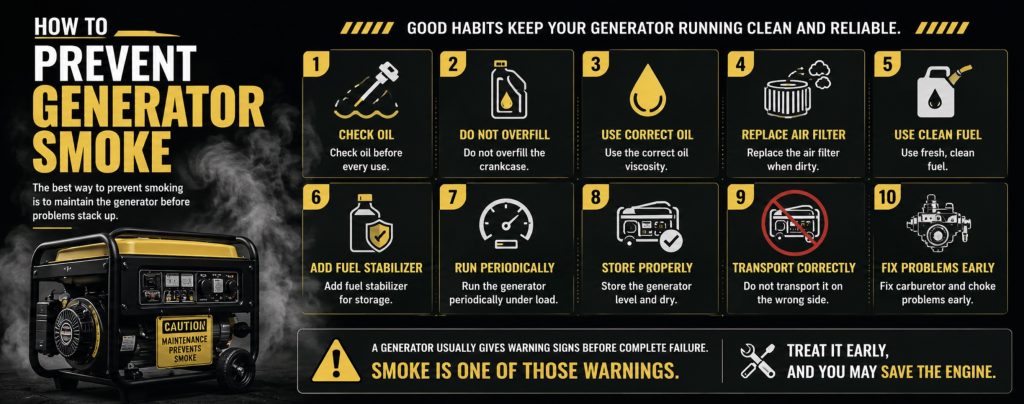
The best way to prevent smoking is to maintain the generator before problems stack up.
Good habits include:
- Check oil before every use.
- Do not overfill the crankcase.
- Use the correct oil viscosity.
- Replace the air filter when dirty.
- Use fresh, clean fuel.
- Add fuel stabilizer for storage.
- Run the generator periodically under load.
- Store the generator level and dry.
- Do not transport it on the wrong side.
- Fix carburetor and choke problems early.
A generator usually gives warning signs before complete failure. Smoke is one of those warnings. Treat it early, and you may save the engine.
Summary
A smoking generator engine can be caused by simple issues like overfilled oil, a dirty air filter, a stuck choke, stale fuel, or a fouled spark plug. It can also point to more serious problems such as worn piston rings, valve wear, or internal engine damage. Start by identifying the smoke color, checking the oil level, inspecting the air filter, testing the spark plug, and looking for carburetor or fuel issues. If the smoke continues after basic repairs, do not keep running the generator hard. Fixing the problem early can prevent a smoking engine from turning into a complete generator failure.
Savior Generator Petcock Gas Fuel Tank Shut Off Valve for Champion Generac

YAMAKATO 5~8KW Generator AVR Automatic Voltage Regulator Rectifier

WOTIAN Pull Start Assembly Compatible with Champion 389cc 420cc 439cc 459cc 5500w 7500w 9000w Generator Parts Engine Recoil Starter Part#46.061000.00

5~9.9KW Generators AVR Automatic Voltage Regulator Rectifier for Predator Honda Champion Duromax Firman Generac 5000 5500 6000 6500 7000 7500 8000 8500 8750 9000 9500 Watt 338cc~459cc Generator Parts
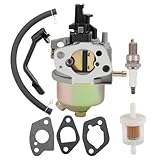
Harbot Carburetor for Harbor Freight Chicago Predator 4000 3000 3050 3200 Watts Generator Powered by A 212CC 208CC 7HP 6.5HP Engine Parts with Fuel Filter Spark Plug
About GeneratorStop.com
We are your #1 power generator guide and resource online. We are dedicated on providing you the best and most useful generator related articles, reviews and tools. learn more...